NOTES ON FIELD TRIPS TO WILPATTU NATIONAL PARK
- Wilpattu National Park 26th to 29th August 2026
I arrived in Wilpattu at around 10.00pm on Tuesday, 25 August. By taking Friday off, I had turned the days ahead into a five-day long weekend, and I was excited by the prospect of spending that time in Wilpattu.
A Jungle Cat ran across the road close to the park entrance.
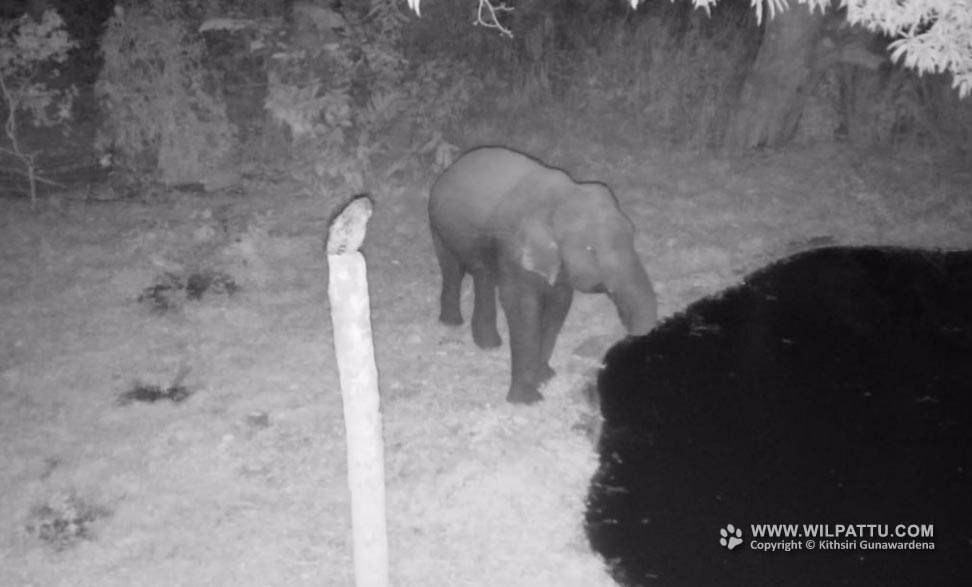
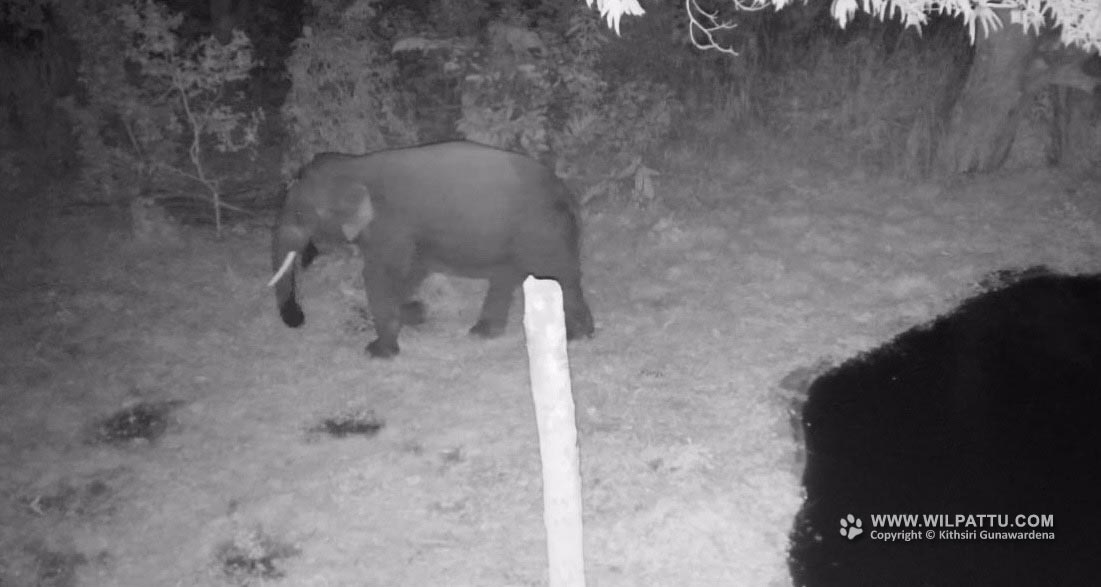
At around 11.40pm, a single-tusked elephant arrived at the garden pond to drink. It was soon followed by a young bull that frequently visits the pond.
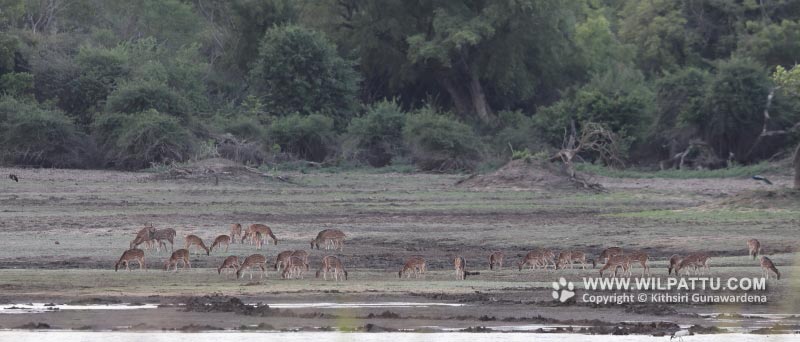
6.10am The water level in Hunuwilagama Tank had receded, exposing a wide stretch of shoreline covered with fresh grass. I counted 49 Spotted Deer grazing on the new shoots.
In the early morning, the deer moved from the direction of the park entrance to the water’s edge to drink. They then fed slowly toward the far end of the tank, a pattern they repeated again in the evening.
There were 4 Buffalo and 5 large Mugger Crocodiles at the edge of the water.
7.20am entered the park
The DWC staff at the gate alerted me to alarm calls nearby. Frantic calls from Spotted Deer and Toque Monkeys were coming from less than 100 metres from the park entrance, suggesting that a leopard had been seen in the area.
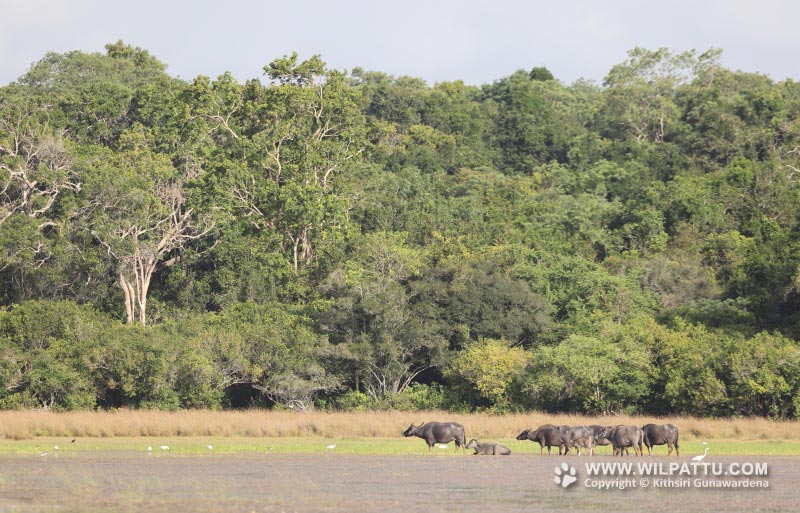
I parked and waited in expectation, but the calls gradually moved farther into the forest. It is likely that the leopard had crossed the road shortly before my arrival and continued deeper into the jungle.8.37am 82 Spotted Deer and a herd of 67 Buffalo including many newly born calfs at Maha Wewa.
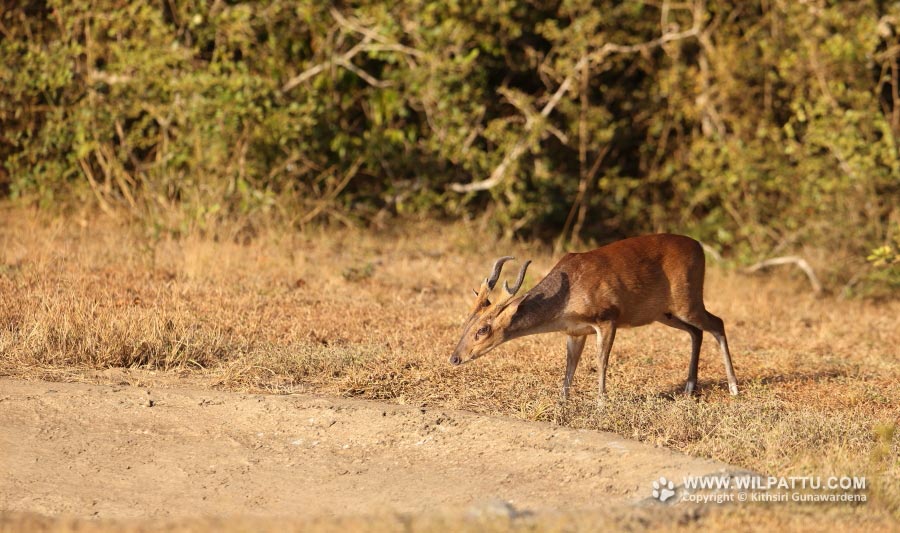
8.39am a Barking Deer at Maha Wewa.
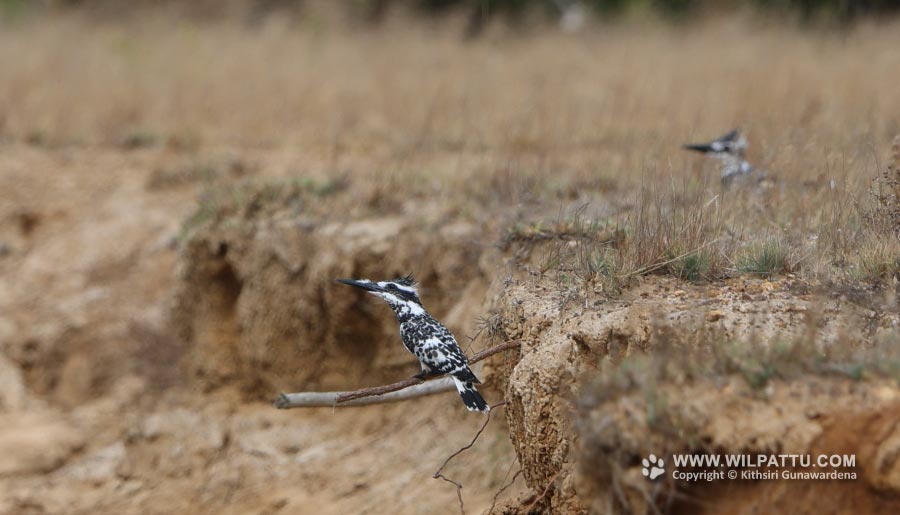
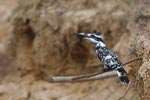
8.59am a pair of Pied Kingfishers at the “Boralu Wala” water hole at Maha Wewa. This is the most seldom seen resident speceis of kingfisher in the park.
9.05am a Ruddy Mongoose at Maha Wewa.
I decided to drive up to Thammannawala and wait near the water hole to observe the animals that might come in to drink. During the dry season, water holes often become reliable viewing points, as many species visit them throughout the day.
9.20am A troop of Grey Langur, Toque Monkeys and a Ruddy Mongoose at Thammanna Wala
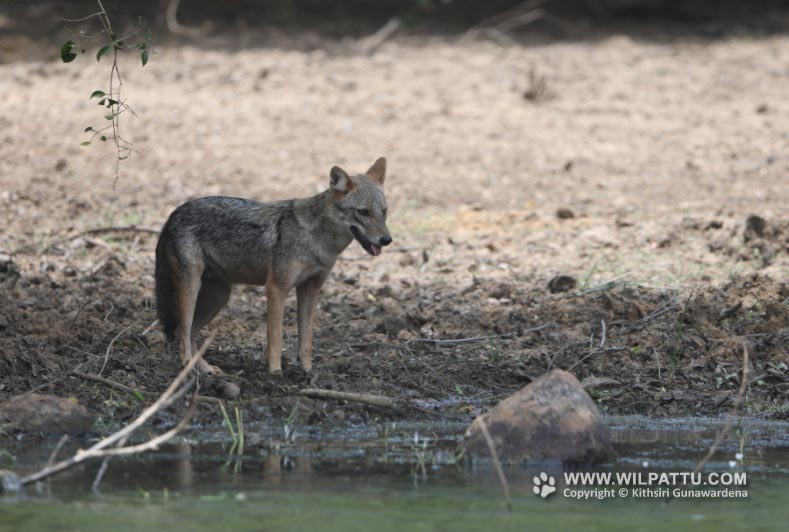
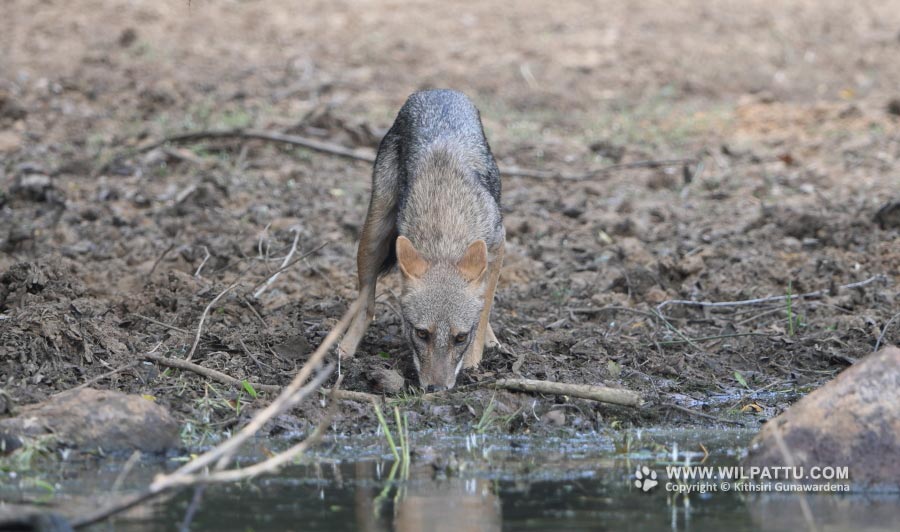
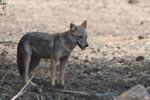
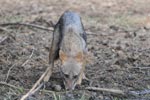
12.29pm a Golden Jacakl arrived to drink at Thammanna Wala. This is the third largest carnivore in the country. The cautious wild canine spent nearly 10 minutes surveing the area before starting to drink.
12.50pm three Spotted Deer walked to the edge of the water for a drink.
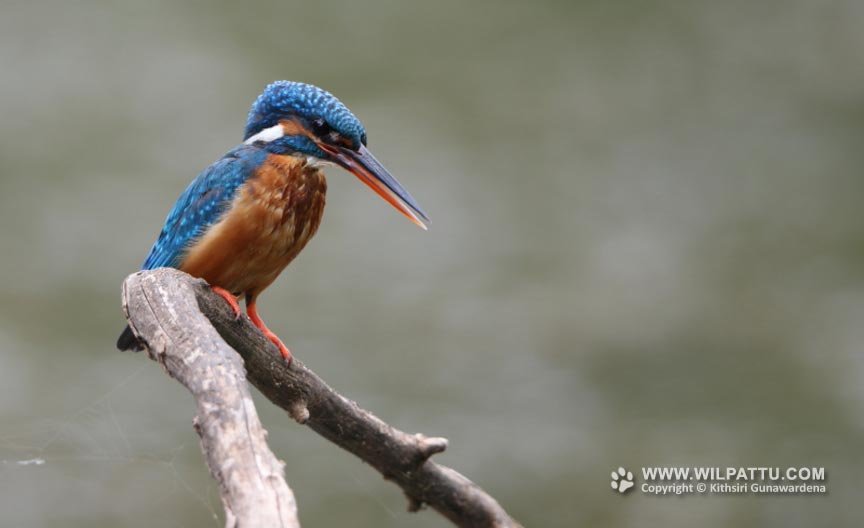
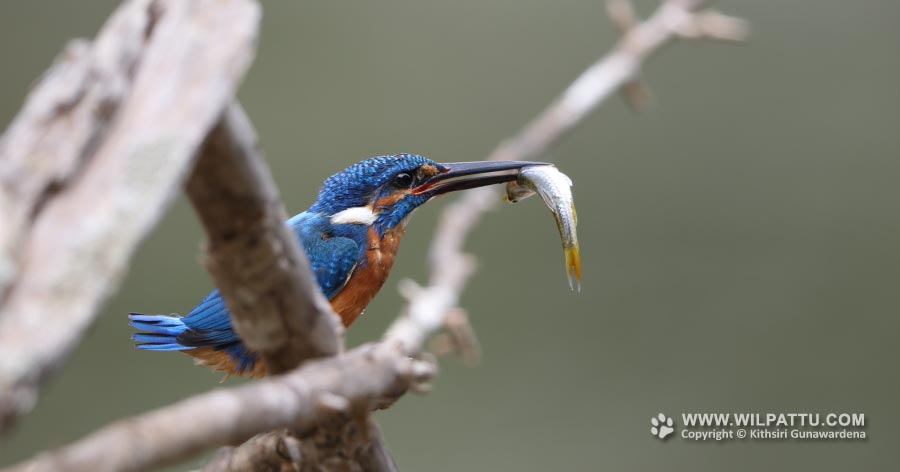
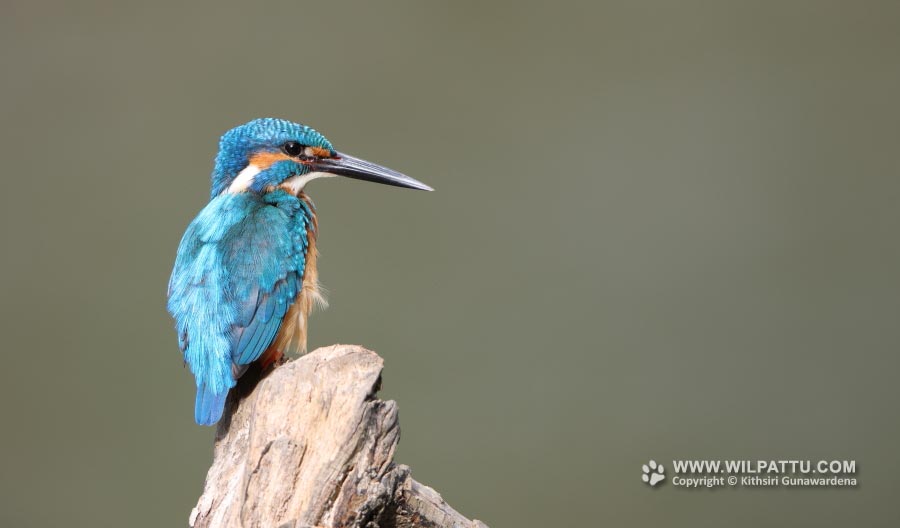
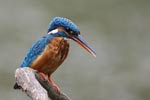
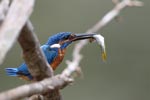
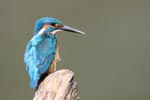
1.00pm a pair of Common Kingfishers at Thamman Wala. The sexes can be distinguished easily in the field by the colour of the bill: the male has both mandibles black, while the female has a reddish-pink lower mandible. Other than catching fish and other aquatic prey by darting in to the water, they also take periodic dips to beat the intense heat of the day.
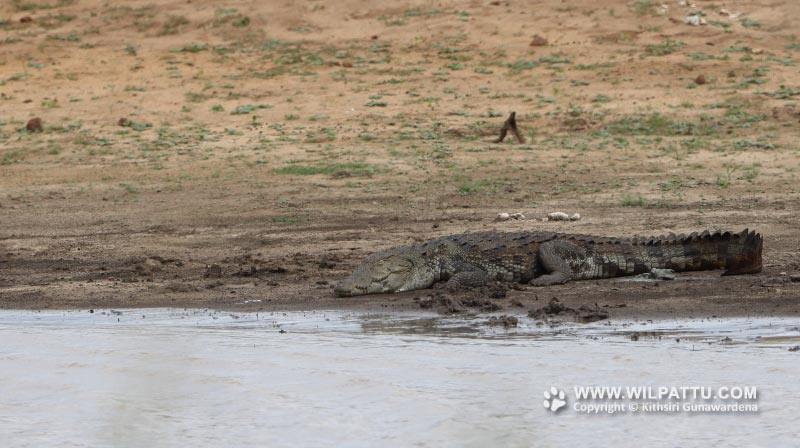
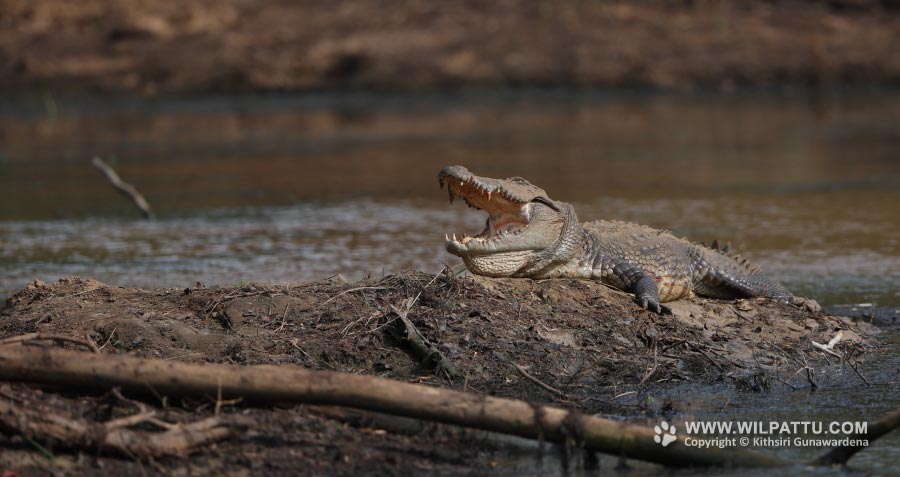
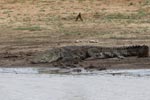
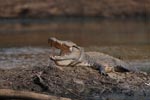
3.39pm a large Mugger Crocodile sunbathing at Walas Wala.
5.58pm left the park
6.20pm two young bull elephants engaged in a mock fight at the Hunuwilagama tank.
7.10pm three Common Palm Civets on a tree in the garden.
8.00pm a White – spotted Chevrotain (Mouse Deer), and two Indian Crested Porcupine in the garden.
Mammals - Elephant 3, Indian Buffalo 71, Sambhur, Spotted Deer 144, Wild Boar, Barking Deer 1, Sri Lankan Jackal 1, Ruddy Mongoose 2, Toque Monkey, Grey Langer, White – spotted Chevrotain, Common Palm Civet 3, Jungle Cat, Indian Crested Porcupine, Giant Squirrel, Indian Palm Squirrel.
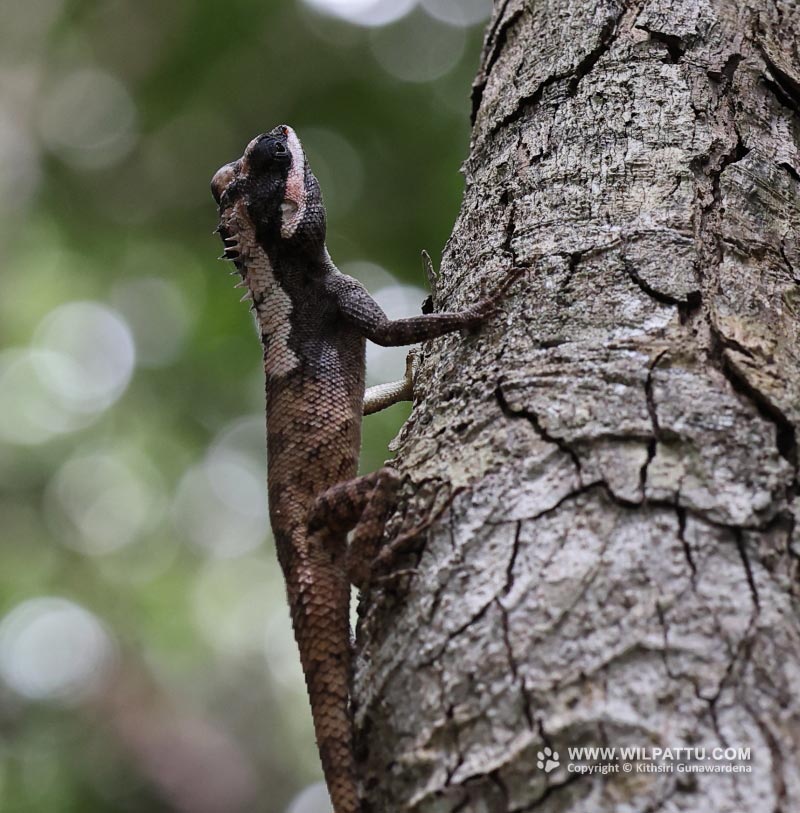
Reptiles – Mugger Crocodile 5, Black Turtle 2, Land Monitor, Common Garden Lizard, Green Garden Lizard, Devaka’s Fan-throat Lizard.27th August 2026
6.15am 48 Spotted Deer, 4 Buffaloe and 8 Mugger Crocodiles at Hunuwilagama Tank.
6.58am entered the park.
7.38am 4 Spotted Deer at Maradanmaduwa.
7.39am 41 Spotted Deer at Maradanmaduwa.
8.05am 4 Spotted Deer between Maradanmaduwa and Maha Wewa.
9.12am At Maha Wewa, I observed 106 Spotted Deer and 77 Buffalo.
This tank once held a large volume of water and supported a wide range of wildlife, including elephants and aquatic birds. However, the bund was damaged during Cyclone Ditwah, causing much of the water to drain away and reducing what was once a majestic water body to a small, pitiful pool.
The DWC is expected to repair the breached bund soon, so that the next rains can restore Maha Wewa to its former condition.11.15am Two Ruddy Mongoose between Thammanna Wala and Divul Pitiya.
1.04pm I parked beside the Divul Pitiya pond to watch the activity around the water.
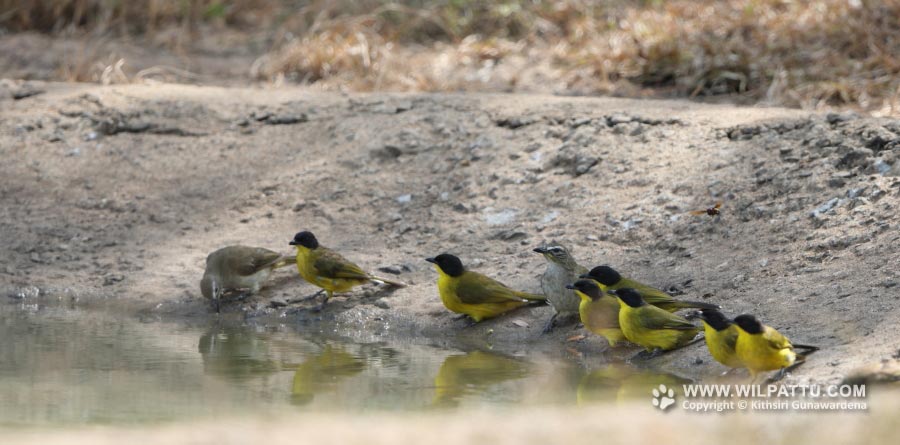
During the dry season, these ponds often attract large numbers of Black-capped Bulbuls, which arrive throughout the day to drink. Because the birds usually remain high in the tree canopy, they are seldom seen during game drives in the wet season.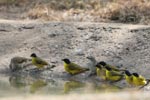
2.35pm a female Sambhur between Galwanguwa and Palukola Wala.
3.58pm a Buffalow at Palukola Wala.
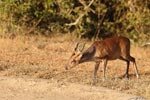
5.27pm a male Barking Deer walked cautiously out of the jungle to reach the water at Divul Pitiya.
6.00pm left the park.
6.15pm one elephant at the Hunuwilagama tank.
Mammals - Elephant 1, Indian Buffalo 82, Sambhur 1, Spotted Deer 203, Barking Deer 1, Ruddy Mongoose 2, Toque Monkey, Grey Langer, Giant Squirrel, Indian Palm Squirrel.
Reptiles – Mugger Crocodile 8, Black Turtle 2, Land Monitor, Common Garden Lizard, Green Garden Lizard, Low-land Kangaroo Lizard, Devaka’s Fan-throat Lizard.
28th August 2026
6.10am 48 Spotted Deer, 4 Buffalo, 6 Mugger crocodiles and one Elephant at the Hunuwilagama Tank.
6.50am entered the park.
7.10am a Barking Deer at Ranawara Pitiya.
8.15am 106 Spotted Deer in a few scattered heards at Maha Wewa. Also 89 Buffalo with many calfs at Maha Wewa.
9.18am a Sambhur close to Borupan Junction.
11.12am 4 Spotted Deer between Mana Wila and Kumutu Villu.
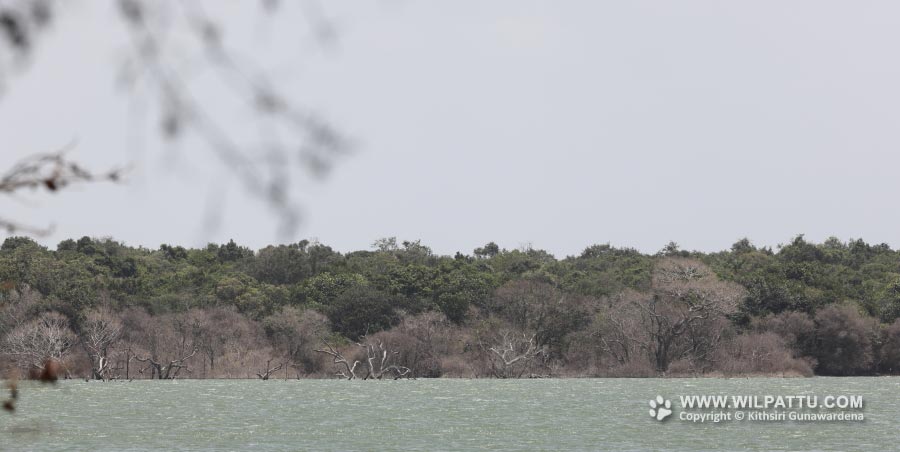
In November last year, Cyclone Ditwah made landfall and brought intense rainfall to the region. As a result, many villus in the northwestern part of the park—including Kokkare Villu, Mahapatessa, Kudapatessa, Kumutu Villu, and Kuruttupandi Villu—expanded far beyond their natural ecological boundaries.
Unlike river-fed wetlands, these villus do not have inflowing or outflowing channels that can drain excess water. Consequently, many trees and shrubs around their margins have remained submerged for more than nine months, well beyond the normal seasonal cycle.
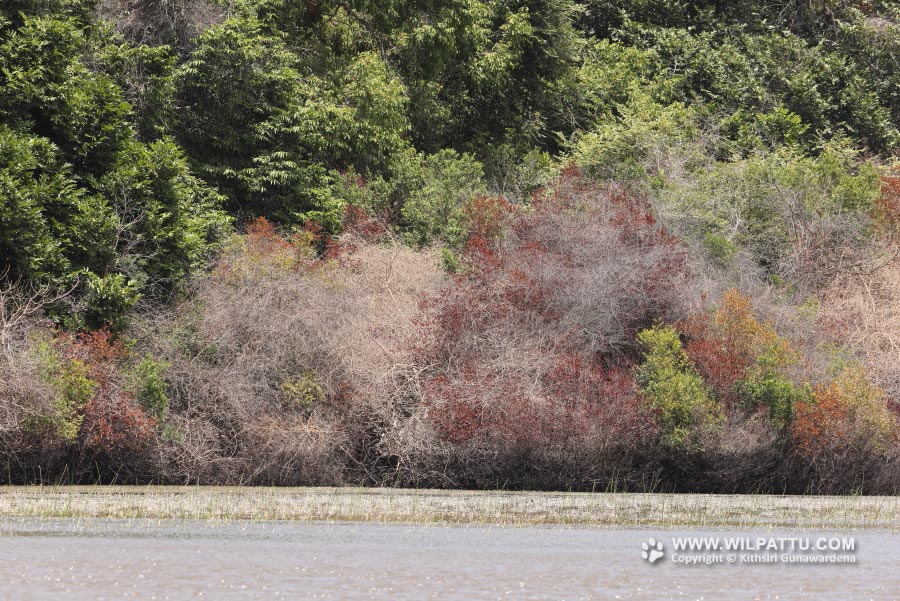
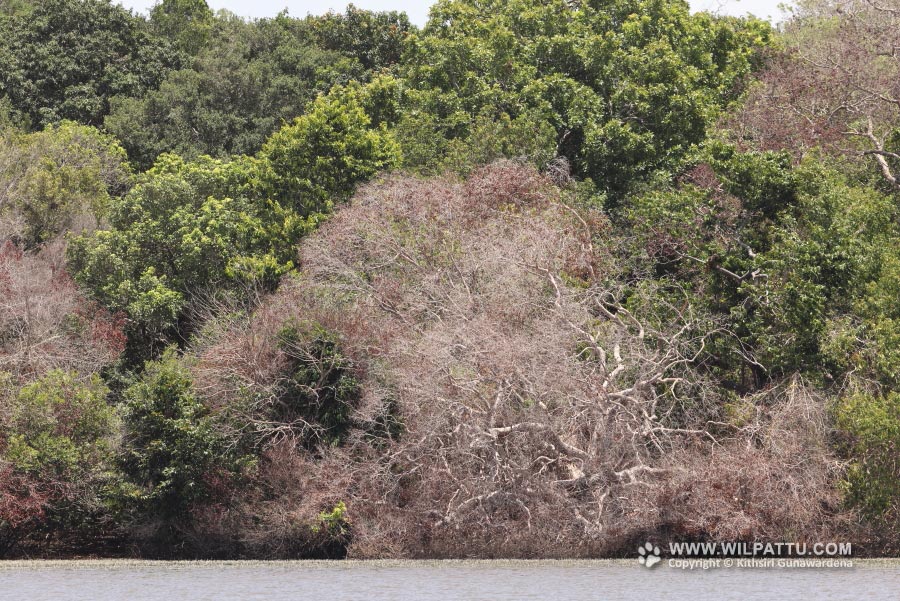
Prolonged waterlogging saturates the surrounding terrestrial soil and deprives tree roots of oxygen. Species such as palu, weera, and satinwood cannot survive under these conditions for extended periods. The resulting root decay is visible as forest dieback: lines of trees along the expanded villu margins have withered and died, leaving skeletal wooden remains along the extended shorelines.
I had observed a similar occurrence of forest dieback in 2015, but it was far less extensive than the damage now visible along these villu margins. It was saddening to see so many large trees—some of which may have taken more than a century to mature—succumb to this prolonged flooding and dieback.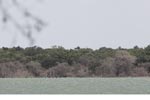
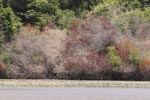
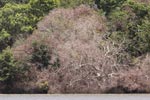
3.03pm a Mugger Crocodile at Kattarambu Wewa.
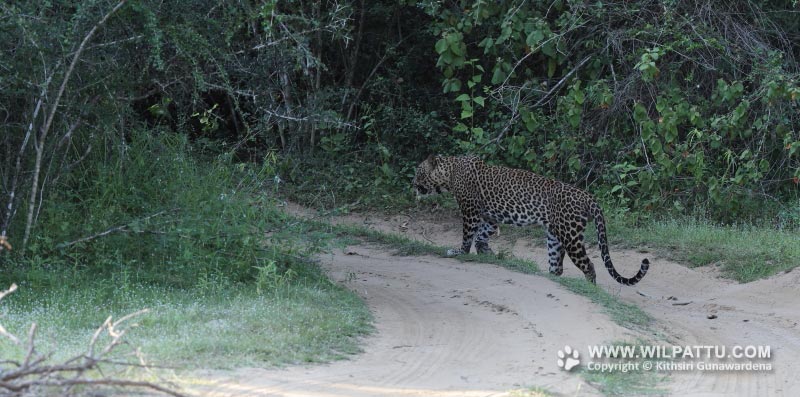
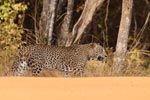
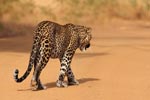
4.26 one Leopard at Kalagedi Bokkuwa. N 08.35777, E 080.11210
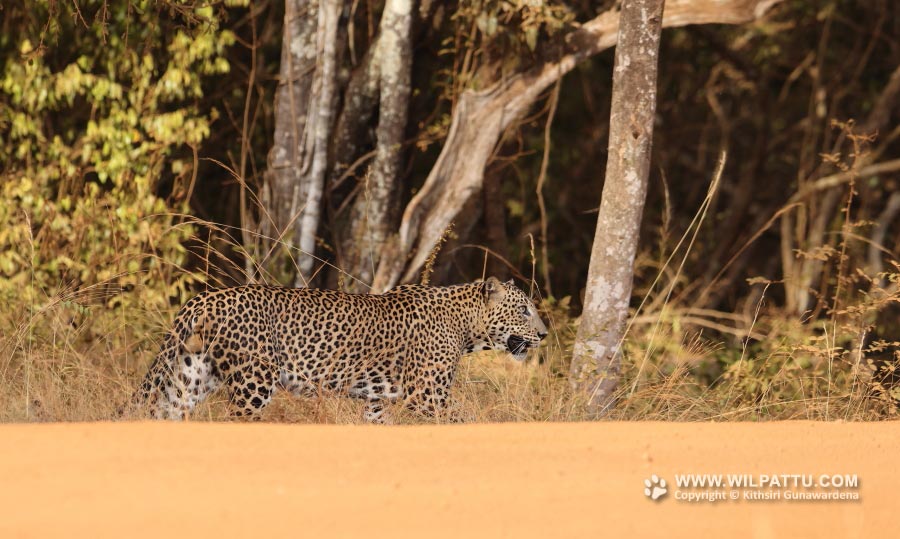
I was on my way to Thammanna Wala when I spotted the leopard beside the road near “Kaum Bokkuwa.” I reversed the vehicle to give the animal space. The leopard walked along the edge of the road for a short distance before moving onto the road and crossing the bridge.
At that moment, two other vehicles arrived. I moved aside so their occupants could have a better view. Unfortunately, one young jeep driver went too close to the animal, causing the leopard to disappear into the forest.
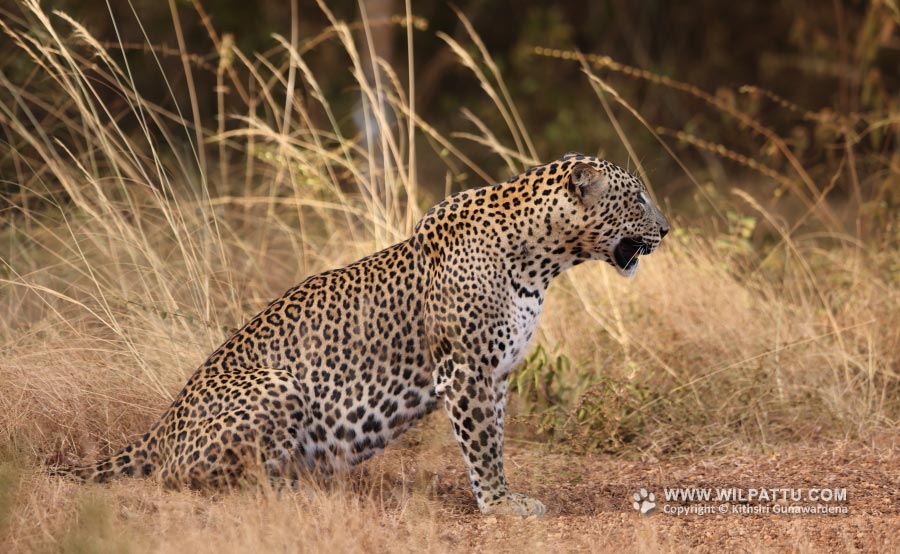
Later, after examining the spot pattern, I identified the leopard as Maradanmaduwa Male 4 (MMMC 4). He is the male cub from the fifth and final litter of Maradanmaduwa Female 1 (MMFC 1). Born in October 2022, he is now almost four years old.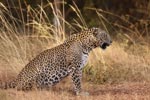
5.37pm one Elephant at Percy-bendi Wewa.
Mammals - Elephant 1, Leopard 1, Indian Buffalo 95, Sambhur 1, Spotted Deer 158, Barking Deer 1, Ruddy Mongoose, Toque Monkey, Grey Langer, Giant Squirrel, Indian Palm Squirrel.
Reptiles – Mugger Crocodile 7, Land Monitor, Common Garden Lizard, Green Garden Lizard, Devaka’s Fan-throat Lizard.
29th August 2026
6.00am 45 Spotted Deer 7 Mugger and 4 Buffaloat Hunuwilagama
6.45am entered the park
6.49am three Ruddy Mongoose between the park entrance and “Siyanbalawa” the large Tamarind Tree.
6.51am a Barking Deer between the Siyamabalawa and Kone Gaha Ela.
6.56am 2 more Barking Deer at Ranawara Pitiya.
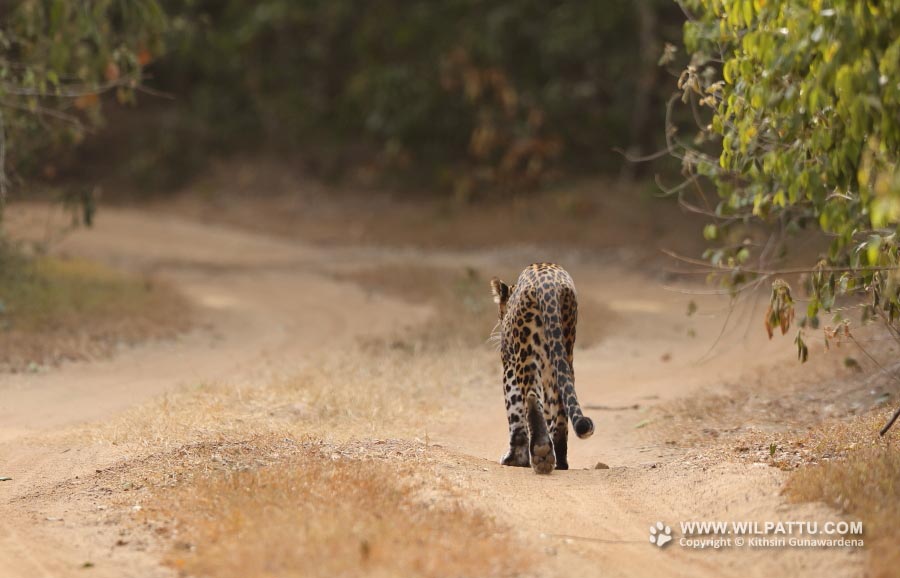
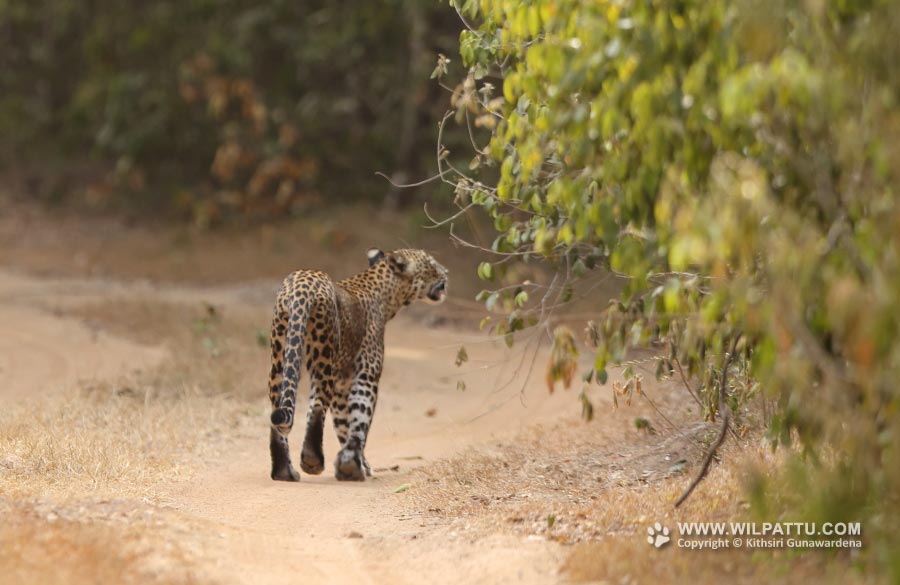
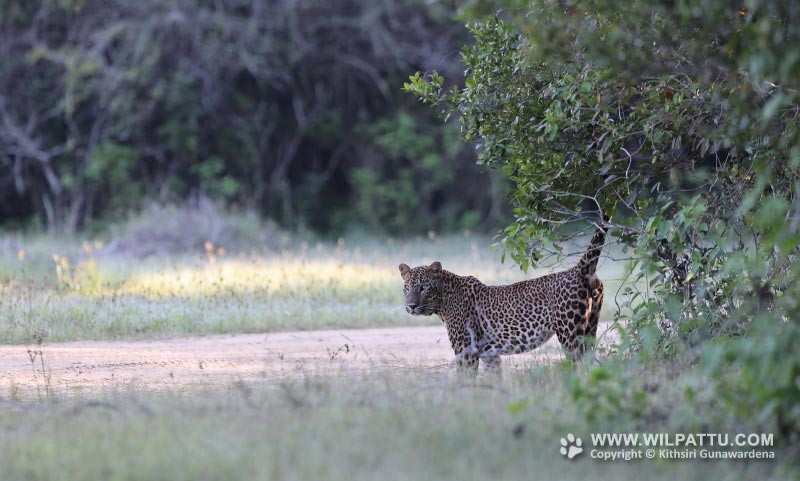
7.02am one leopard crossed the road close to the Paaluwilandawa junction.
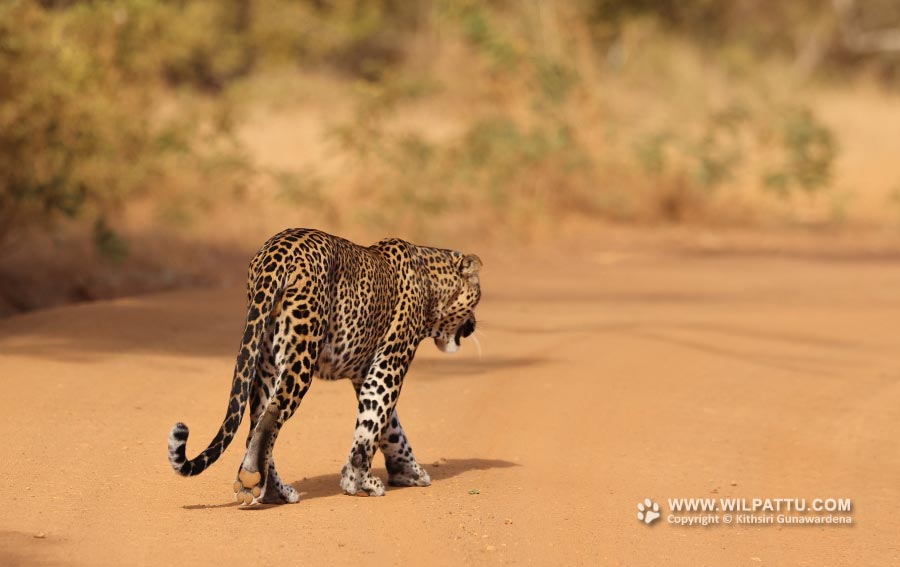
7.04am I drove down Paaluwilandawa Road and spotted the leopard. N 08.33858, E 080.12663
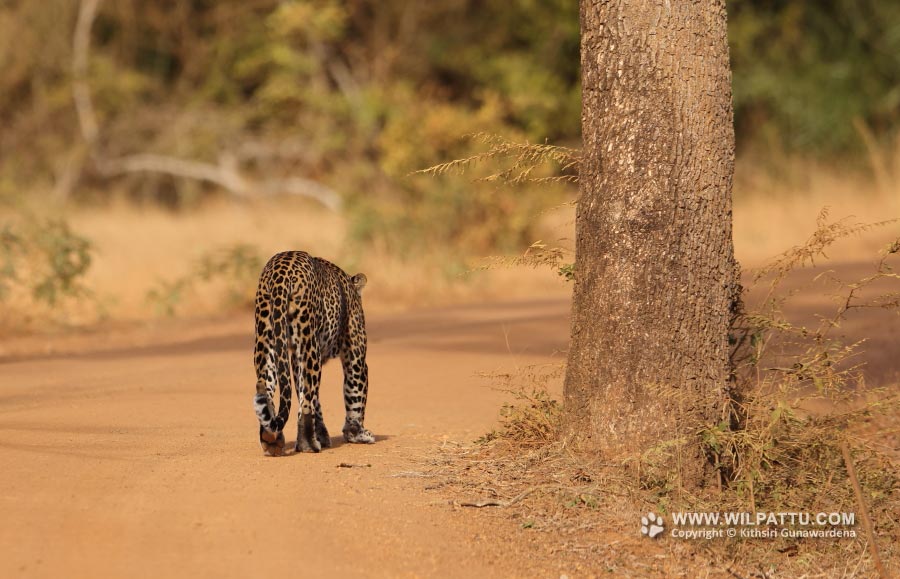
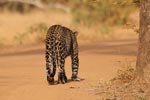
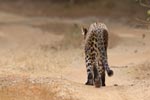
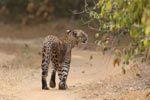
It was an adult female. She walked in the direction of the tank for a short distance and moved into the forest. I only managed to capture a few images, of her walking away from me. I was dejected since I did not have the image of the tail spot pattern of many of the leopards that I had managed to photogrph around this area. Later, upon comparing the spot pattern of her tail with other leopards in my data base, I was quite thrilled to find that it was Divulgas Mandiya Female 1 (DGMF 1). A female that I had not received any records for more than one and half years. The last record that I had of her was in December 2024 by Pathumm Neeliya from Divulgas Mandiya. There were no records of her since then until now. She was born in February 2016 and is ten years and six months of age now.
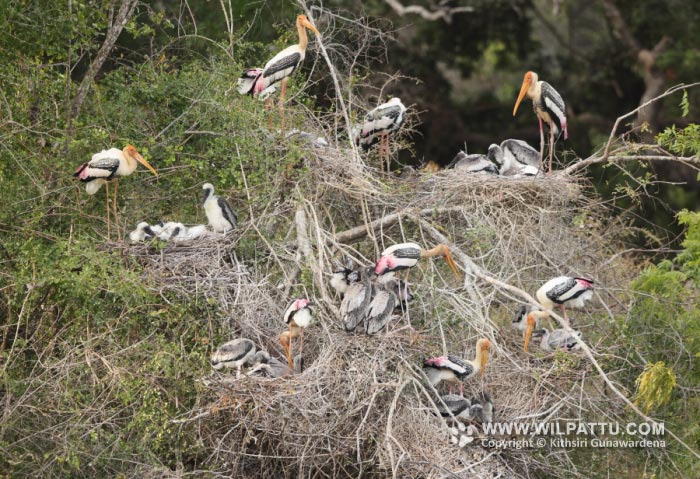
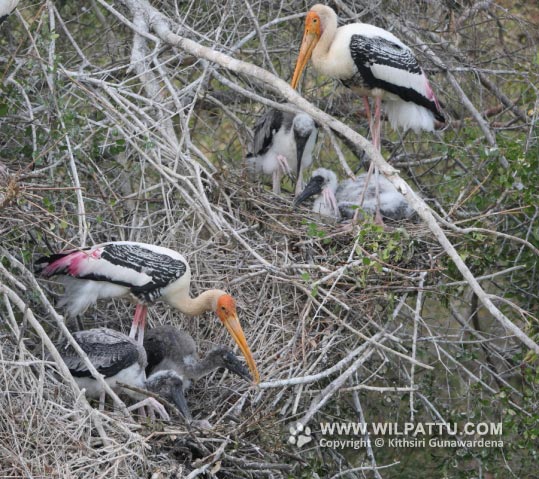
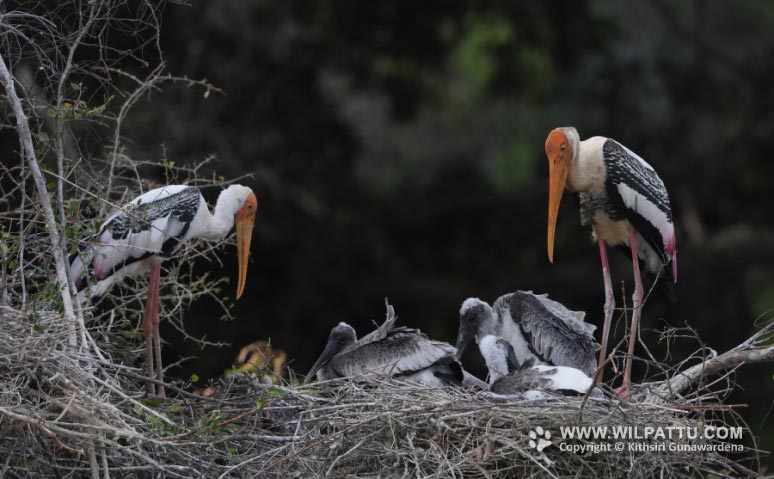
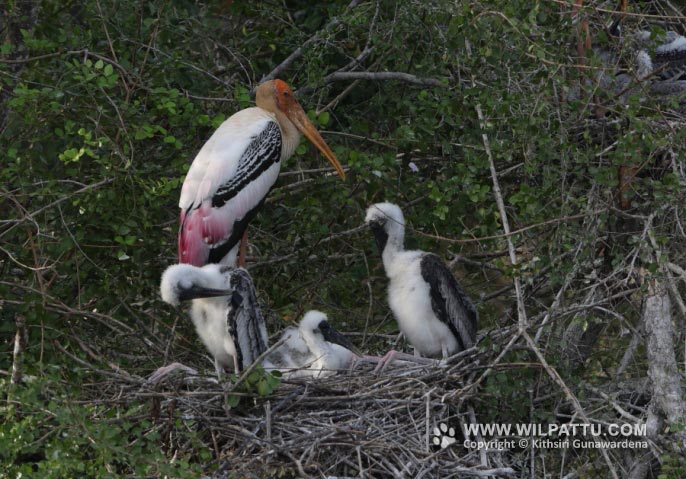
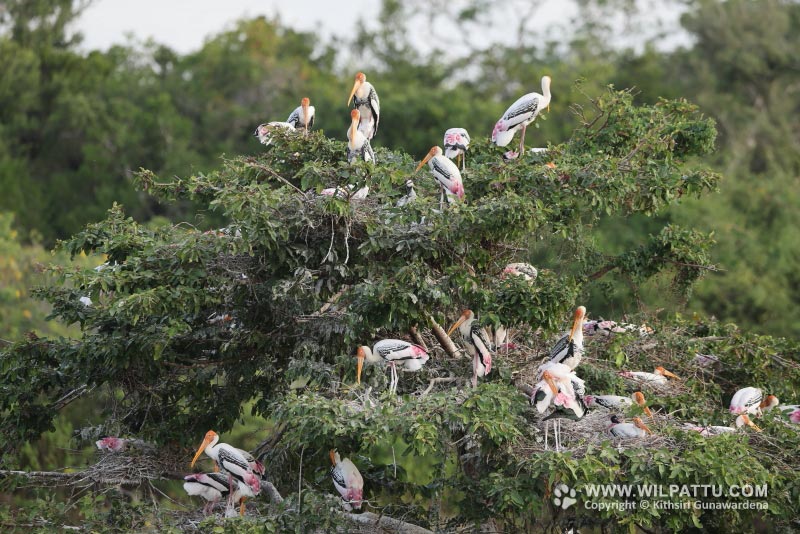
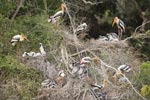
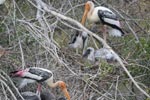
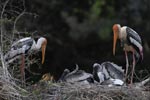
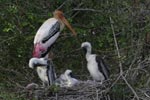
7.20am The Painted Stork nesting colony, which had initially been confined to a single tree in the centre of the water body, has now expanded to the trees growing around its margins. Some nests have been built quite close to the water, and many held more than two chicks.
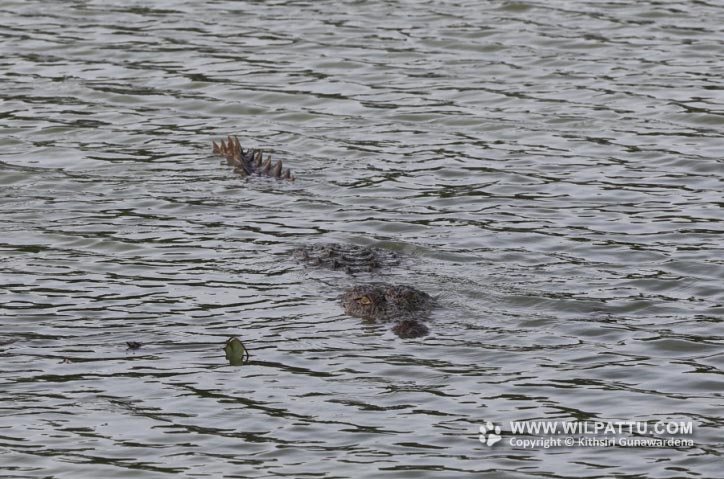
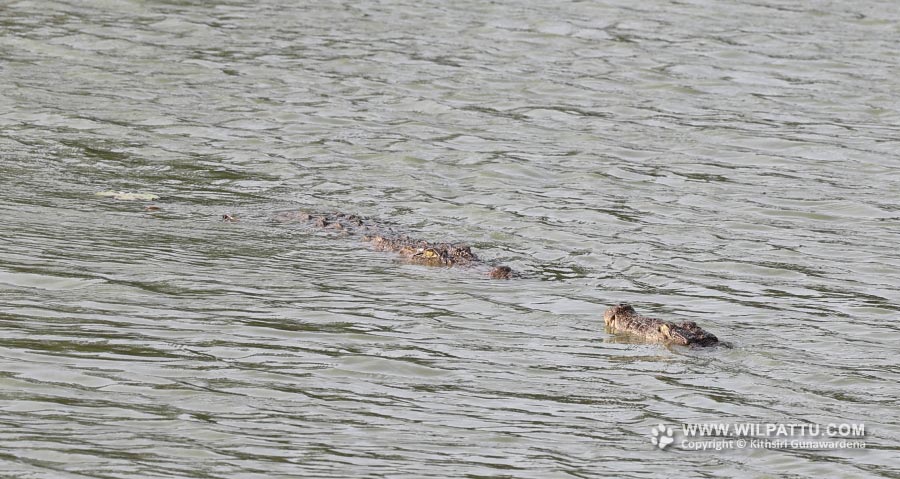
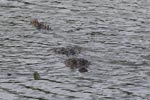
I observed several large Mugger Crocodiles close to the trees supporting the nests. On an earlier occasion, I had seen chicks that missed their footing and fell into the water become easy prey for these large reptiles.
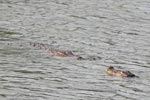
7.45am a Spotted Deer between Paalu Wilandawa Junction and Thmmanna Wala.
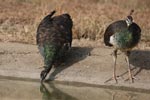
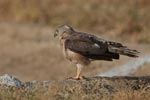
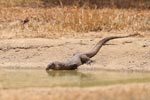
8.00am I decided to wait at Divul Pitiya pond as there had been a good leopard sighting at This water hole yesterday.
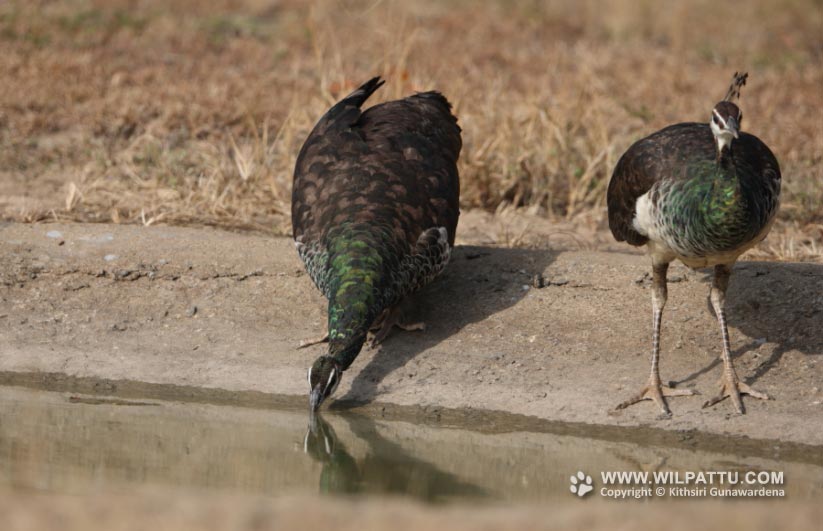
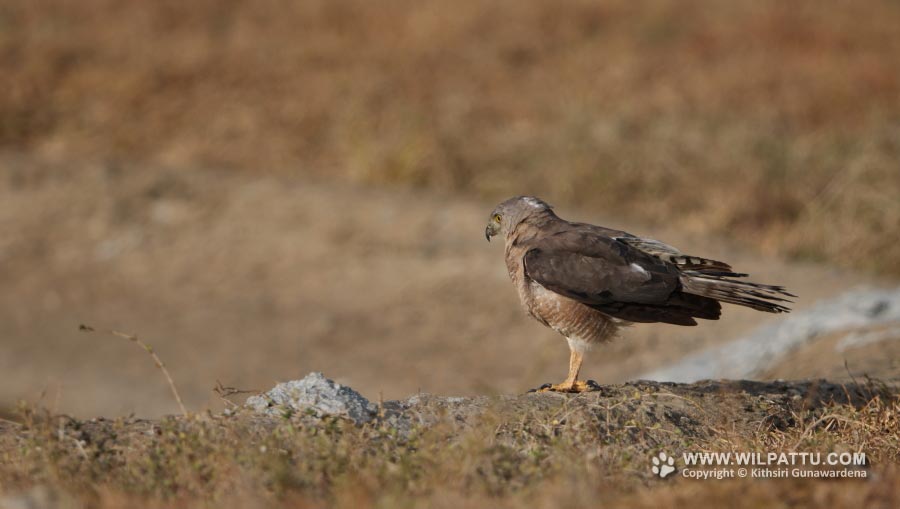
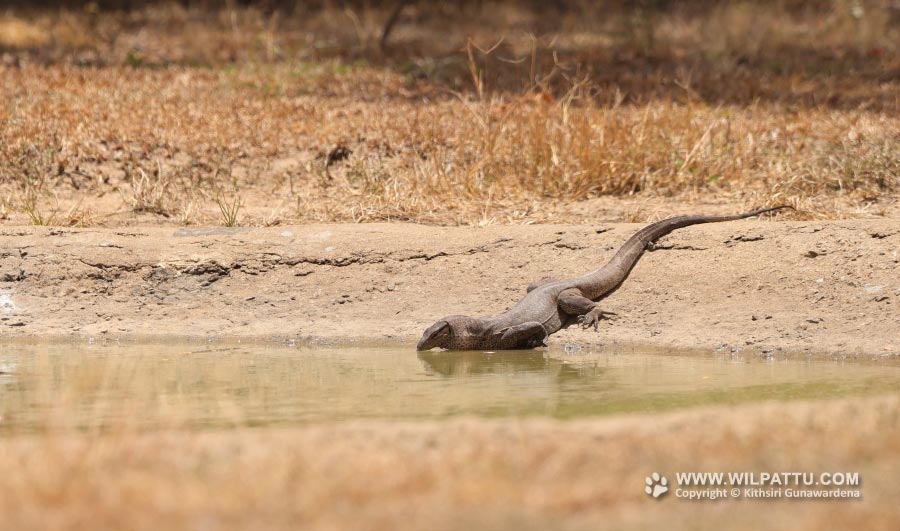
Indian Peafowl, a Shikra many speceis of birds and a Land Monitor drank water at different times of the day.
5.55pm Left the park.
Large herd of 69 Spotted Deer, one Elephant and 4 Wild Buffalo at Hunuwilagama tank.
Mammals - Elephant , Leopard 1, Sloth Bear, Indian Buffalo 4, Sambhur, Spotted Deer 45, Wild Boar, Barking Deer 3, Ruddy Mongoose 3, Toque Monkey, Grey Langer, Giant Squirrel, Indian Palm Squirrel.
Reptiles – Mugger Crocodile 7, Black Turtle 3, Land Monitor, Common Garden Lizard, Green Garden Lizard, Devaka’s Fan-throat Lizard.Birds, Butterflies & Flora observed during the field trip
Birds – Lesser Adjutant, Painted Storks, White-necked Stork, Wood Sandpiper, Little-ringed Plover, Commn SandpiperButterflies - Banaded Peacock, Blue Mormon, Common Mormon,
Wild Orchids – Vanda tessellate
- Wilpattu National Park 10th to 12th July 2026
I arrived at my house in Wilpattu around 10.30pm on the 9th. A Fishing Cat and a few Spotted Deer were on the Hunuwilagama Tank bund between the park entrance and my house.
10th July 2026
6.30am 47 Spotted Deer and 3 large Mugger Crocodiles at Hunuwilagama Tank.
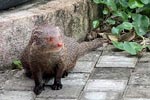
A few Ruddy Mongooses regularly visit the feeding stations in the garden during the day, while Common Palm Civets and Small Indian Civets visit them at night. Only natural foods found in the area are placed at these stations twice a day.
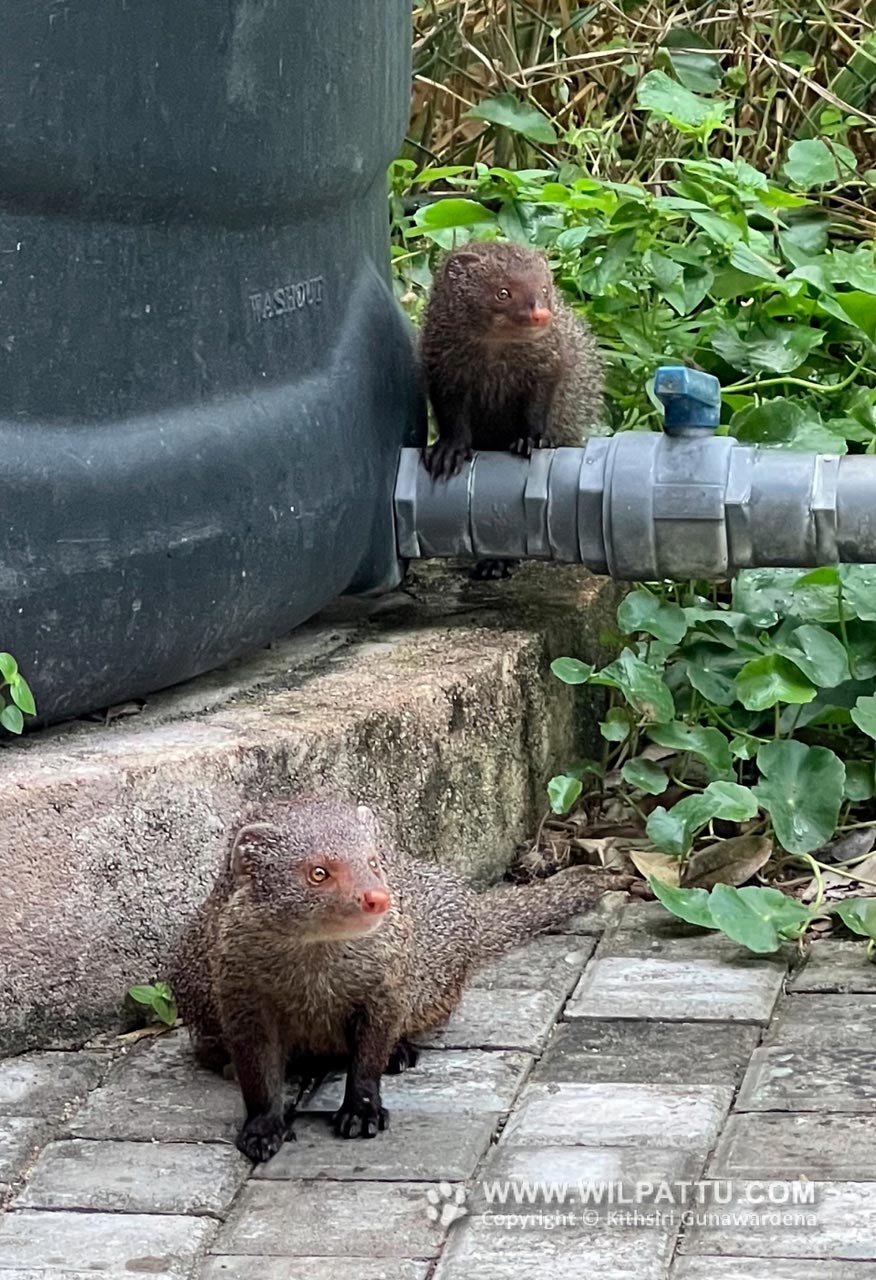
One intelligent female Ruddy Mongoose used to watch the caretaker take rice, bananas, and other food from the kitchen and gradually began frequenting the kitchen area. She has now become quite friendly with the caretaker, Sisira, and boldly walks through his room and the kitchen. Sisira has named her “Kiree.” She responds to her name and takes bananas from his hand. This time, I was thrilled to see that she had arrived with a pup. In return for the handouts they receive, both provide useful pest control around the house.
7.17am entered the park
A Barking Deer at the park entrance.
7.27am a Ruddy Mongoose at Percy Bendi Wewa.
The nesting colony of Painted Storks at Percy Bendi Wewa, which first occupied a tree growing in the centre of the water body, has now expanded to the surrounding trees. Many water birds build nests on trees growing in water, or on dead tree stumps, because these sites offer three main advantages.
The first and most obvious advantage is protection from predators, such as mammals and reptiles, that climb trees to prey on eggs and chicks. Secondly, because the nests are directly exposed to the sun, their proximity to water helps keep the chicks cooler during the midday heat. Thirdly, nesting close to feeding grounds reduces the energy adults must spend bringing food to their growing young.
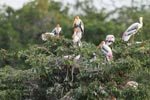
I recorded a few pairs of these birds nesting here for the first time in June 2024. I have been visiting the park almost every month since 2011 and had not observed nesting here untill mid 2024. The colony has now expanded to more than 45 pairs nesting here.
7.46am a herd of 7 Buffalo between Palukola Wala and Gal Wanguwa.
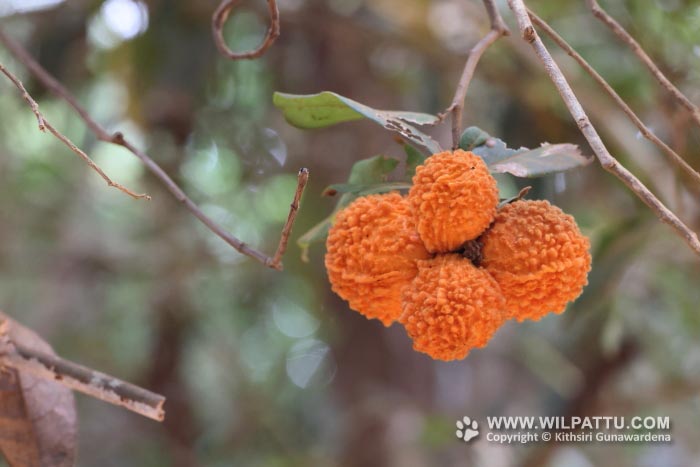
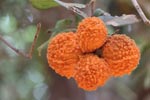
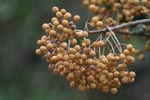
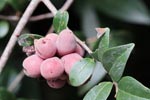
8.21am the endemic Sphenocarp Uvaria Uvaria sphenocarpa vines had produced bright orange clusters of fruit. In Sinhala, these fruits are referred to as “Pata Bambara.” This woody climber belongs to the Soursop family (Annonaceae). The sweet pulp of the ripe fruits is eaten by Giant Squirrels, fruit-eating birds, fruit bats, and civet cats. Two butterfly species frequently seen in the park, the Common Jay and the Tailed Jay, lay their eggs on the leaves of this vine, and their larvae feed on the foliage.
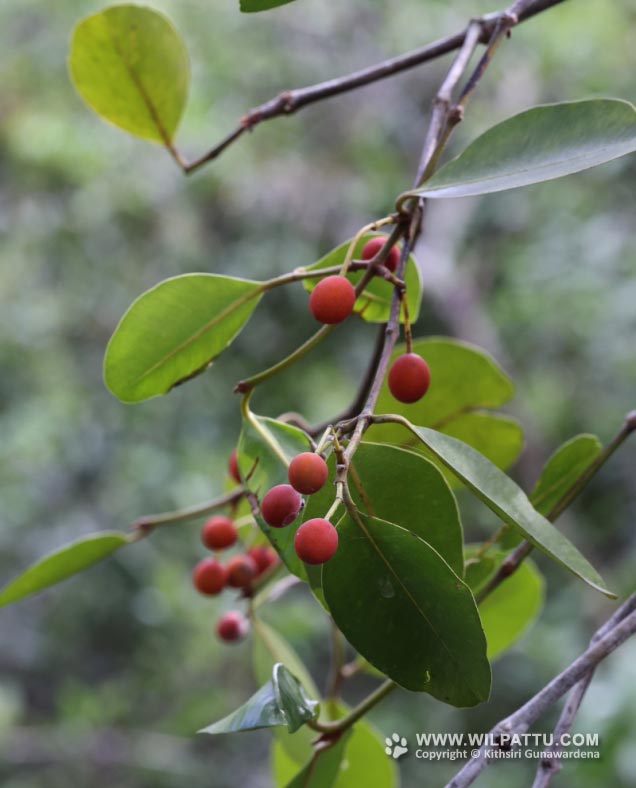
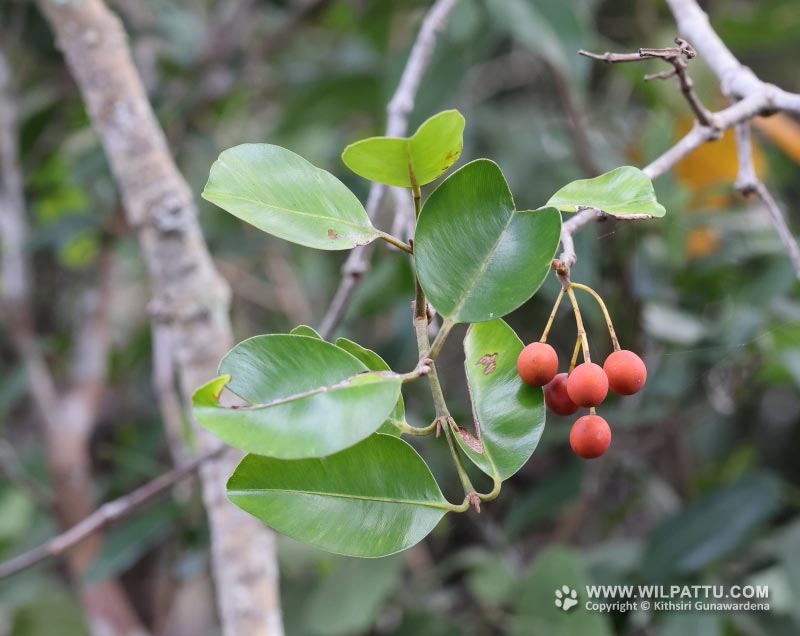
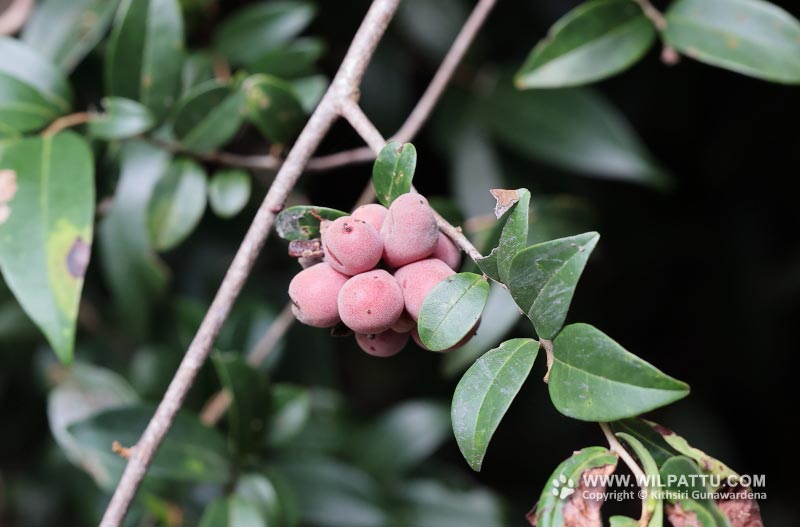
9.09am photographed a fruiting Calaba Tree Calophyllum calaba between Mahapatessa and Nelum Wila. This tree, known in Sinhala as “Guru Keena” or “Heen Keena,” thrives mainly in the sandy areas of the park. Its fruiting season is during June and July. The sweet pulp of the reddish-maroon fruit is edible and provides food for many species of birds, bats, and small mammals.
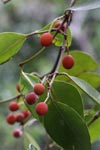
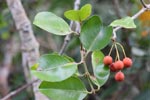
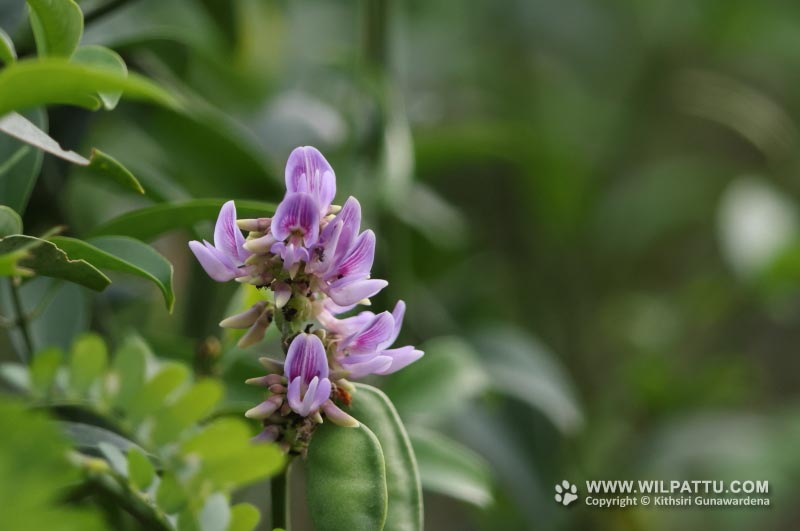
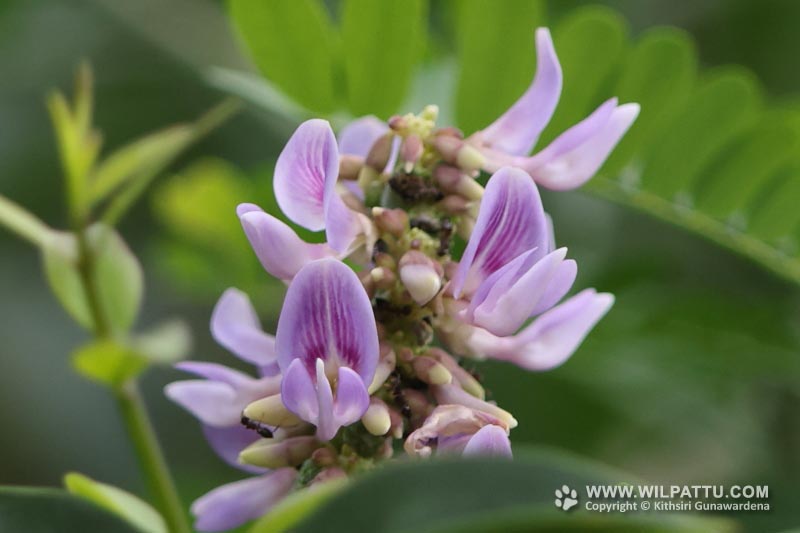
9.12am a Rosary Pea vine Abrus precatorius, commonly referred to in Sinhala as Olinda, was in bloom at Nelum Wila. This is a slender, perennial climbing plant indigenous to the country. The vine plays an important role in Sri Lankan culture, as its bright red and black glossy seeds are used in the traditional April New Year game known as “Olinda Keliya,” played mostly by women. The game is played on a specially crafted wooden board called an “Olida Poruwa.” These seeds contain abrin, a deadly toxin, but several parts of the plant, including the leaves, bark, roots, and seeds, are used in Ayurvedic medicine after rigorous processing to reduce their toxicity.
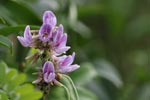
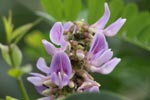
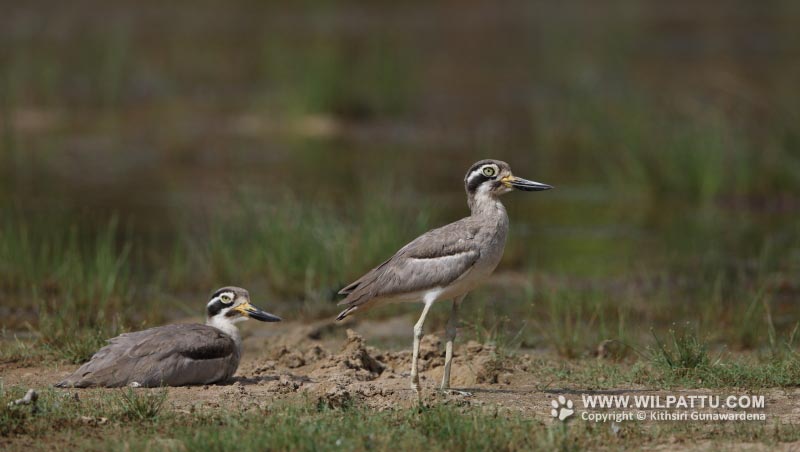
9.30am a herd of 5 Buffalo and a pair of Great Stone Plover at Nelum Wila Pitiya.
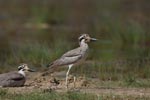
9.48am 12 Spotted Deer at Ilanda Motte.
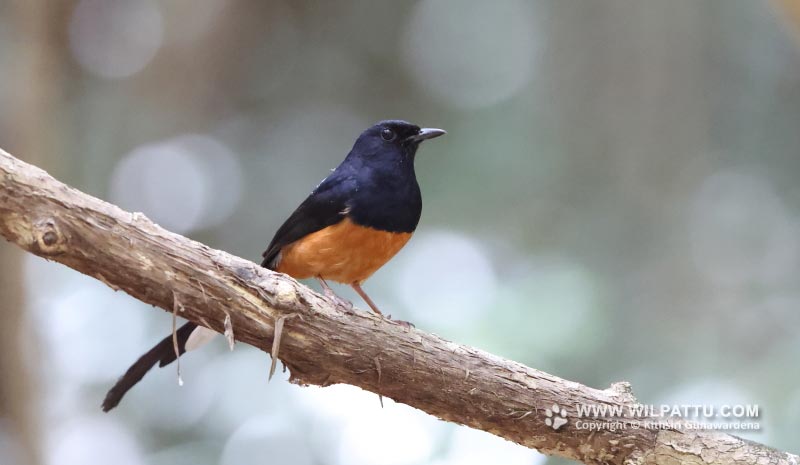
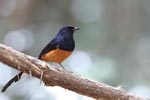
10.20am a male White-rupmed Shama between Down Hall Pitiya and Mana Wila.
10.27am 6 Spotted Deer at Mana Wila.
10.59am 4 Spotted Deer between Kattarambu Wila and Kok Motte.
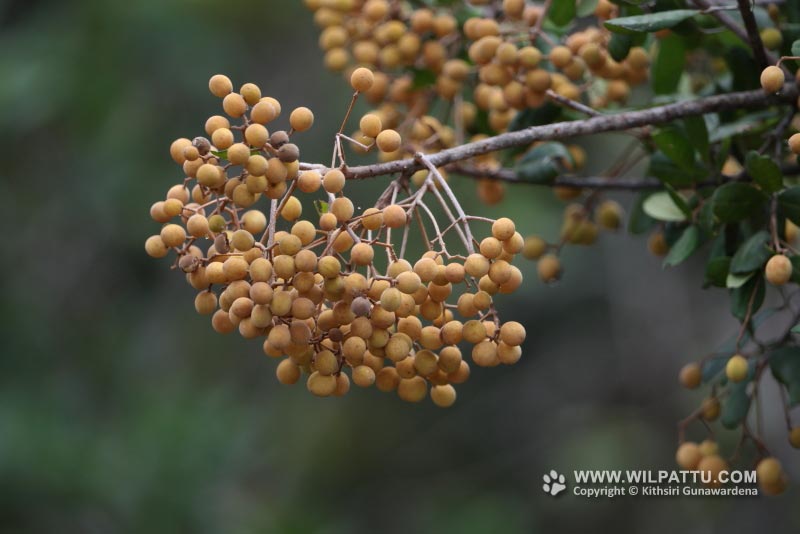
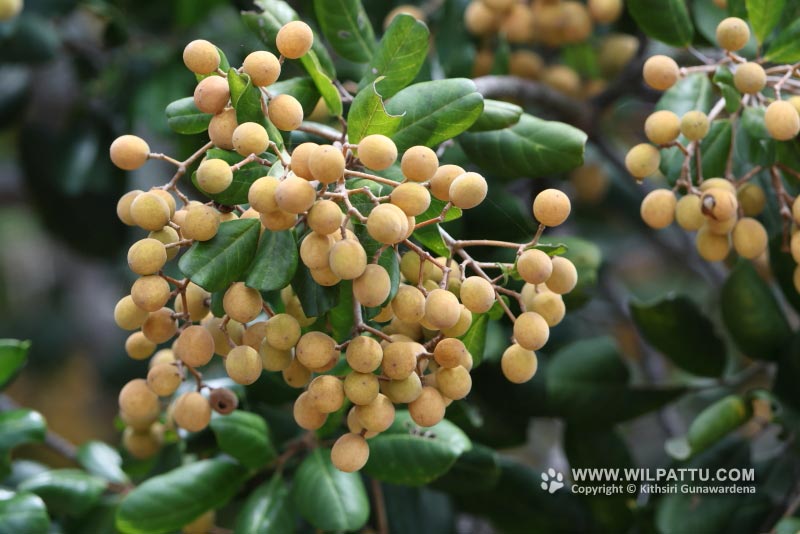
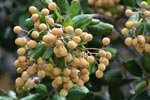
11.25am photographed a fruit-laden Three-leafed Walsura Walsura trifoliolata tree at Kattarambu Villu. Its English name refers to its trifoliate leaves. This common tree fruits throughout the park in June and July, producing abundant small, globular, brownish-yellow berries. I have seen many frugivorous birds, including pigeons and hornbills, feeding on them, while fruit bats visit the trees at night. The berries are sweet and sour, unlike the much sweeter fruits of Palu, Weera, and Madang. This may explain why I have not observed Sloth Bears feeding on them in Wilpattu, although they are known to do so elsewhere.
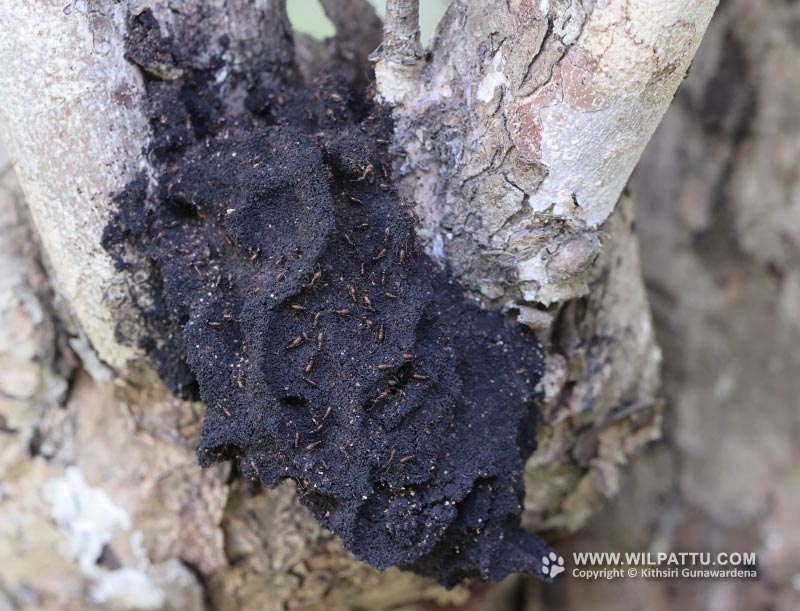
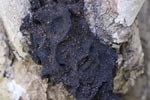
12.17pm photographed a colony of Sri Lankan Prossessional Termites Hospitalitermes monoceros at Illanda Motte. These fascinating lichen feeding insects build charcoal-black nests in tree crevices using their own excreta. In Sinhala, they are known as “Geriya,” while the nest material is called “Geri Pas.” It is said to be used in some traditional medicinal preparations. I have observed these termites moving across the forest floor and along tree trunks in the early mornings and evenings. Most of the colony consists of smaller worker termites, which travel in long lines, while the larger soldiers stand guard along the route. The paths they use gradually become blackish.
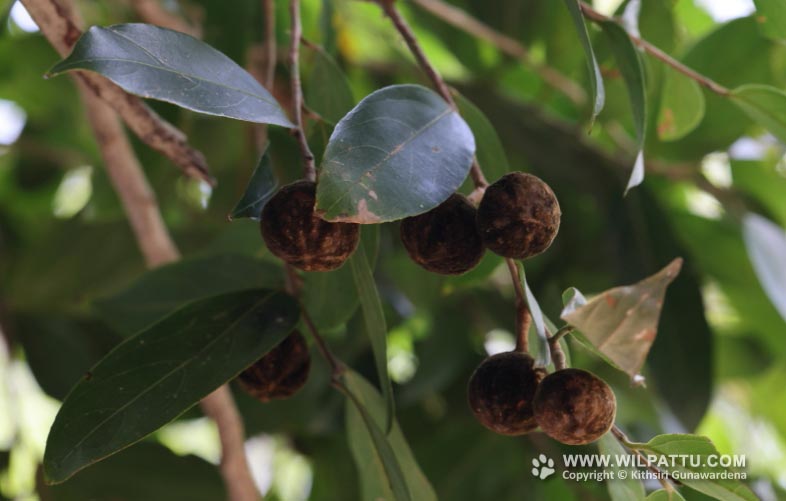
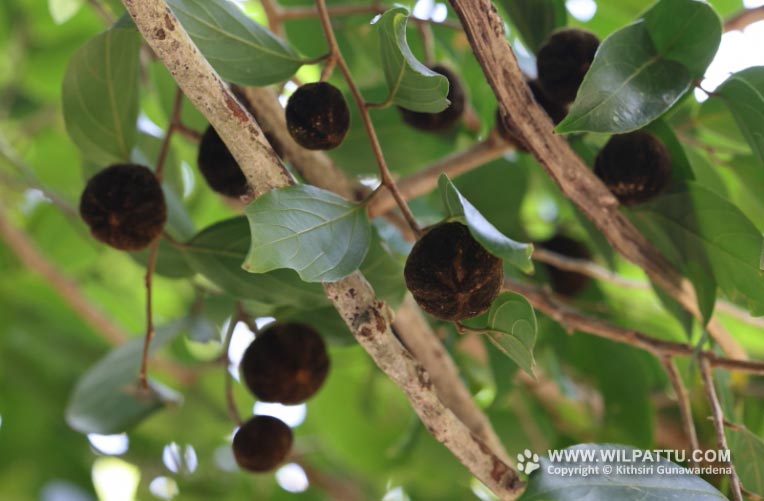
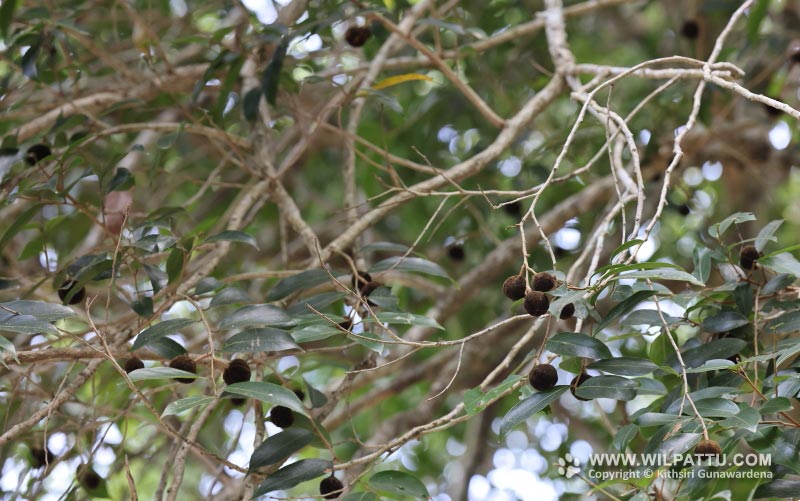
12.28am On the Ilanda Motte to Uraniya road, I noticed a tree bearing dark brown fruits that I had not previously recorded in the park. After I shared the images with Dr. Samantha Suranjan, he identified it as False Chaulmoogra Hydnocarpus venenatus, an endemic species known in Sinhala as Makulu or Makulla. Its seeds are used to produce an oil locally called “Kave Thel,” which is used in traditional Ayurvedic medicine to treat several skin diseases, including leprosy. The fruits and seeds contain compounds with narcotic properties. Indigenous communities use the chopped fruits as fish poison to harvest fish trapped in pools of water.
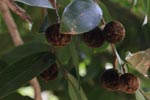
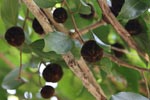
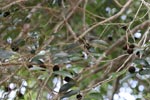
3.25pm the woody climbing shrub Ceylon Uvaria Uvaria zeylanica, referred to in Sinhala as “Palu Kan” or “Palanga,” was in fruit at many locations in the park. I photographed a bush bearing clusters of ripe fruit on the road from Mahapatessa to Nelum Wila.
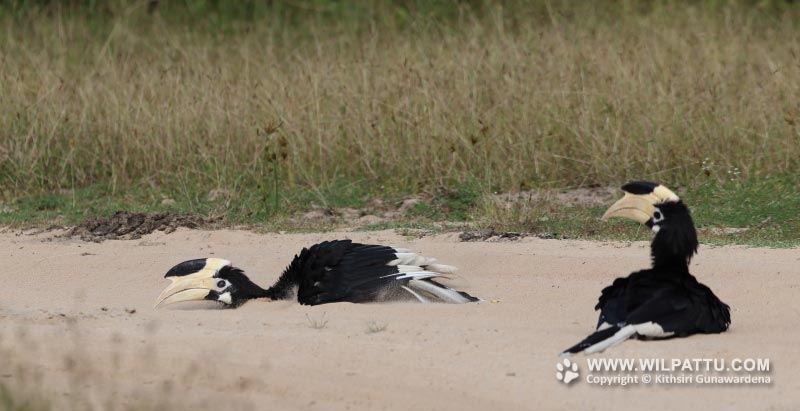
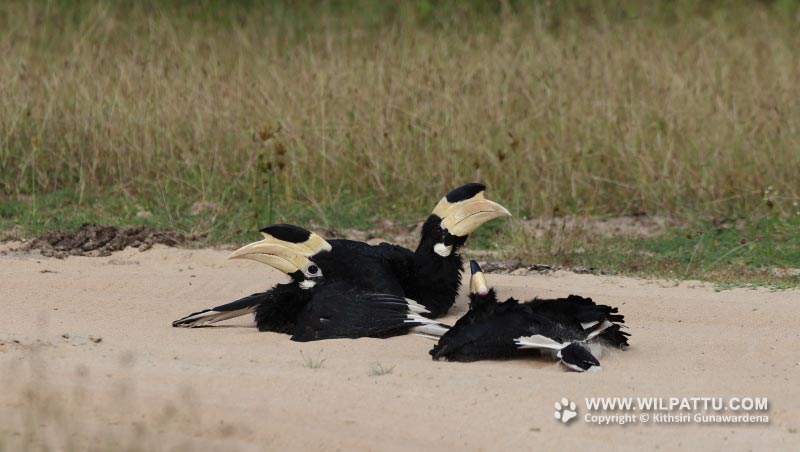
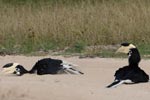
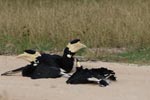
3.46pm a few Malabar Pied Hornbills shuffled and rolled in the fine sand at Nelum Wila Pitiya. I have frequently observed these birds dust-bathing in the late afternoon. This behaviour is known to help remove tiny parasites from their feathers and skin, as the fine dust can suffocate and dislodge mites and ticks. Hornbills also use oily secretions to waterproof their feathers, and dust helps absorb excess oil. The friction between sand particles helps remove dirt and keeps the feathers in good aerodynamic condition.
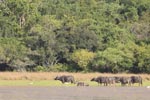
4.15pm a herd of 10 Buffalo, including a newborn calf, was at Borupan Wila. The adult females in the herd showed strong protective behaviour towards the calf. Last week, one of the calves in this herd had been attacked and killed by the dominant male leopard in the area. As a result, the herd was especially protective of the remaining calf, which stayed surrounded by the adult buffaloes.
5.10pm a Sloth Bear at Maradanmaduwa.
5.35pm 2 Elephants at Paalu Wilandawa Tank.
6.00pm left the park.
Mammals - Elephant 2, Leopard, Sloth Bear 1, Indian Buffalo 12, Sambhur, Spotted Deer 79, Wild Boar, Barking Deer 1, Fishing Cat 1, Ruddy Mongoose 4, Toque Monkey, Grey Langur, Giant Squirrel, Indian Palm Squirrel.
Reptiles – Mugger Crocodile 3, Flapshell Turtle 1, Black Turtle 6, Land Monitor, Common Garden Lizard, Green Garden Lizard, Low-land Kangaroo Lizard, Devaka’s Fan-throat Lizard.
11th July 2026
6.20am I counted 65 Spotted deer and 4 large Mugger Crocodiles at the Hunuwilagama Tank.
7.27am entered the park.
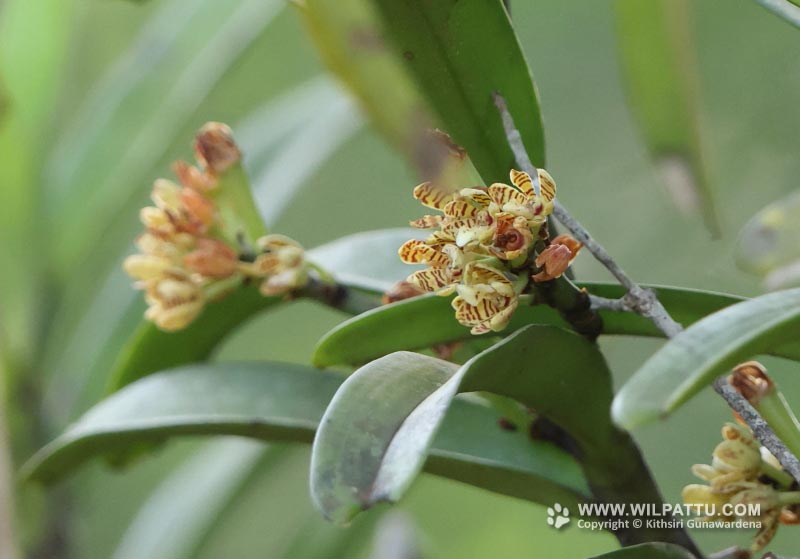
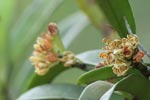
7.34am The Banded Button Orchid Acampe primorsa, in bloom between the park entrance and Ranawara Pitiya.
7.40am 3 Spotted Deer between Percy Bendi Wewa and Paaluwilandawa Tank.
7.55am 3 more Spotted Deer between Thamanna Wala and Kukulkatuwa junction.
8.07am a Ruddy Mongoose on Maha Wewa road.
8.15am a herd of 12 Spotted Deer at Maha Wewa.
8.16am 3 Buffalo at Maha Wewa.
8.20am 16 more Buffalo at Maha Wewa.
8.21am 12 more Spotted deer and two more Buffalo at Maha Wewa.
9.24am 4 Spotted Deer on Maha Wewa road.
9.26am 15 Spotted Deer at Maradanmaduwa.
9.30am am 9 Spotted Deer at Maradanmaduwa.
9.35am 7 Spotted Deer at Thambioluwa.
9.45am a Painted Lip Lizard on the new road from Mahapatsessa to Kudapatessa road.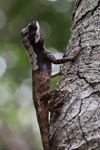
1.23pm one leopard on the new road from Kudapatessa to Nelum Wila. N 08.41229, E 079.99941
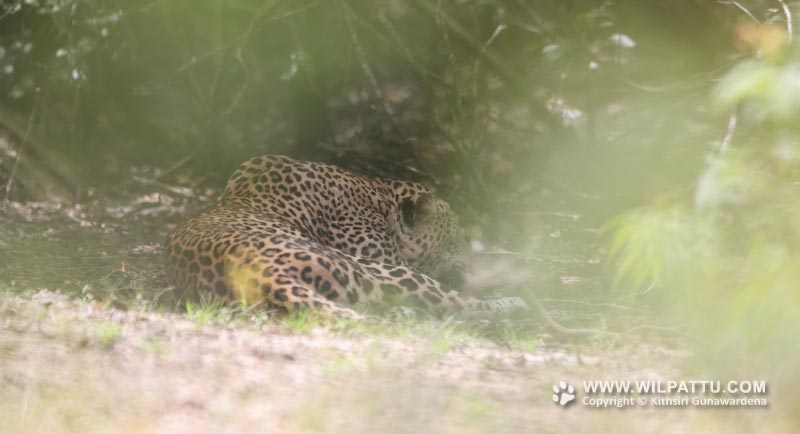
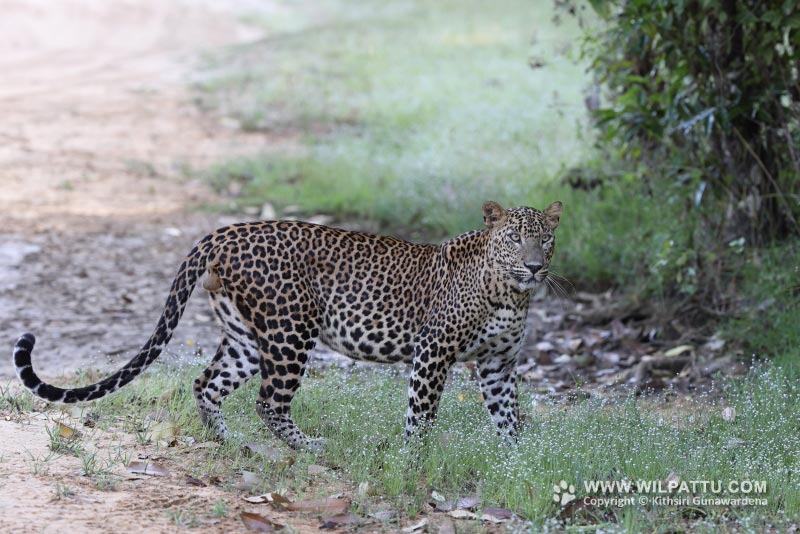
The adult male leopard was sleeping under a bush and was partially covered by foliage. Later, upon examining the spot pattern, I noted that this was the dominant male in the main villu area, Nelum Wila Male 5 (NWMC 5), popularly referred to as “Neluma” by guides and safari jeep drivers. There were many safari jeeps on this narrow road, and I managed to get only a few record images, which enabled me to identify the leopard.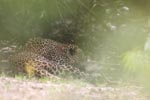
2.16pm 3 Spotted Deer between Mana Wila sand patch and Mana Wila.
2.20pm one more Spotted deer at Mana Wila.
4.30pm 2 Black-naped Hare at Kumbuk Wila pitiya.
4.32pm one Elephant at Thimbiri Wila.
4.39pm 2 Mugger Crocodiles and a herd of 12 Buffalo at Borupan Wila.
5.02pm 8 Spotted Deer at Maradanmaduwa.
5.41pm a Ruddy Mongoose between Ranawara Pitiya and Kone Gaha Ela.
6.00pm left the park.
Around 10.45pm and Elephant walked through the garden while I was seated on the balcony.Mammals - Elephant 2, Leopard 1, Sloth Bear 1, Indian Buffalo 21, Sambhur, Spotted Deer 142, Ruddy Mongoose 5, Black-naped Hare 2, Toque Monkey, Grey Langer, Indian Crested Porcupine, Giant Squirrel, Indian Palm Squirrel.
Reptiles – Mugger Crocodile 2, Flapshell Turtle 1, Black Turtle 8, Land Monitor, Common Garden Lizard, Green Garden Lizard, Painted-lip Lizard, Low-land Kangaroo Lizard, Devaka’s Fan-throat Lizard.
12th July 2026
6.15am a young tusker visited Hunuwilagama Tank. He drank water and retreated into the jungle. The usual herd of 57 Spotted Deer and a small sounder of 5 Wild Boar were also seen across the tank.
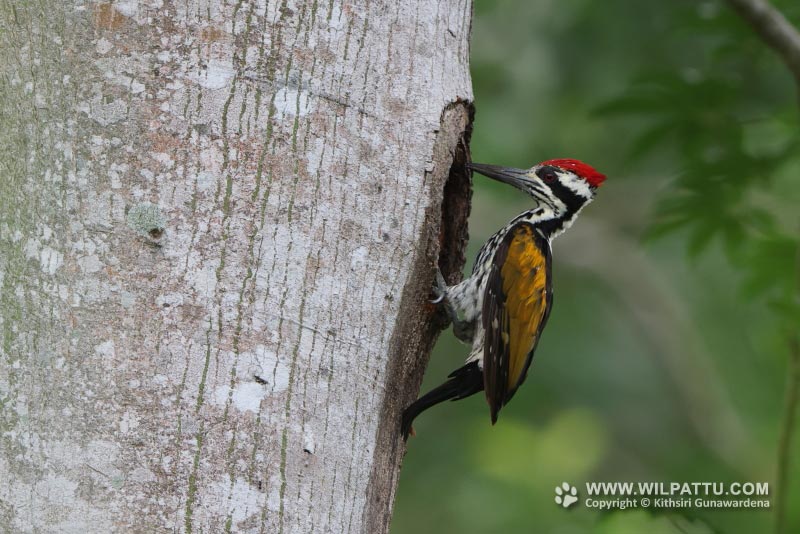
Malabar Pied Hornbills and Ceylon Grey Hornbills frequently visit the bird feeding tray in the garden. A pair of White-naped Woodpeckers were examining a tree hole on a nearby Kapok Tree tree.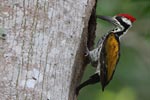
I left Wilpattu around 12.30pm.
Birds, Butterflies & Flora observed during the field trip
Birds – Lesser Adjutant, Painted Stork, White-necked Stork, White-naped Woodpecker, Golden-backed Woodpecker, Malabar Pied Hornbill, Ceylon Grey Hornbill, Coppersmith Barbet, Ceylon Small Barbet, Brown Fish Owl, Crested Honey Buzzard, Little Ringed Plover.Butterflies - Blue Mormon, Banded Peacock, Redspot Duke, Common Mormon, Tailed Jay.
Wild Orchids – Vanda tessellate, Acampe primorsa, and Vanilla walkerae.
Fruiting trees - Kiri Kone, Moona Mal, Guru Keena, Palu Kan, Weera, Pulima and Bole Pana
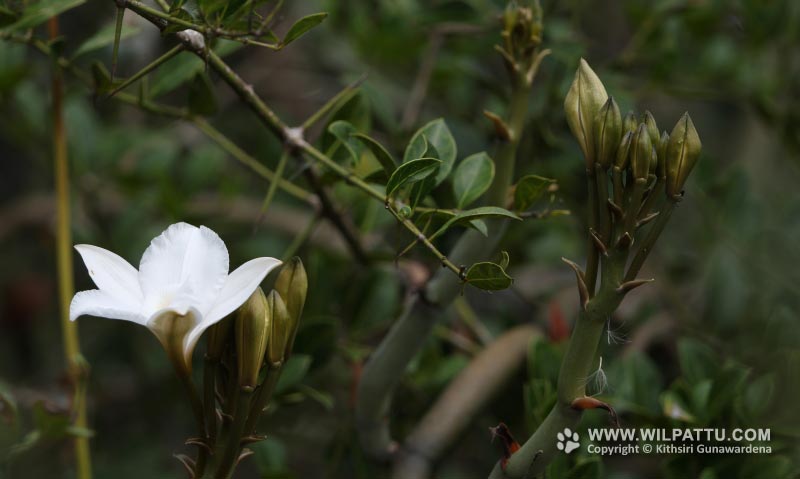
Wildflowers - Abrus precatorius Rosary Pea (E) Olinda (S), Canavalia virosa Sword Bean (E) Jack Bean (E) Mudu Awara (S), Crossandra infundibuliformis Firecracker Flower (E) , Hibiscus eriocarpus Maple-leaved Mallow (E) Kapukinissa (S) Wal Wada (S) Plumbago zeylanica Ceylon Leadwort (E) Wild Plumbago(E) Ela Nithol(S)
- Wilpattu National Park 1st to 4th April 2026
6.30am one Elephant, 35 Spotted Deer and 7 Mugger crocodiles at Hunuwilagama Tank.
7.30am arrived at the park entrance.
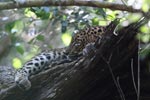
8.31am one Leopard at Maha Wewa. N 08.37494, E 080.12744
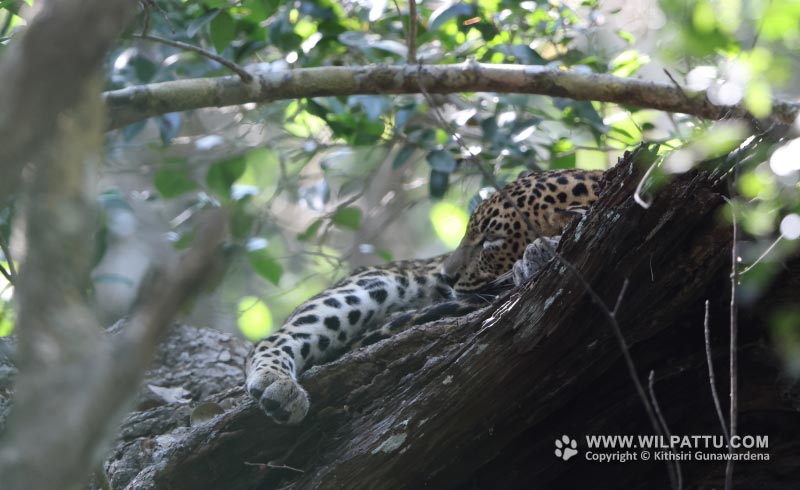
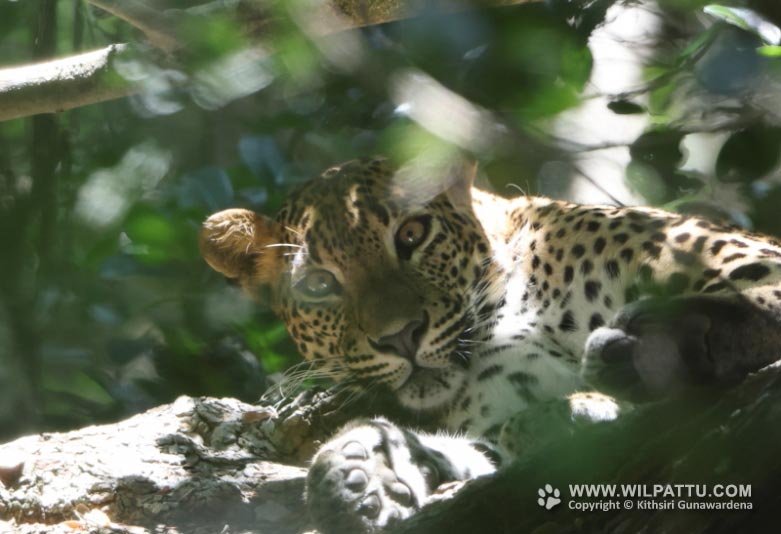
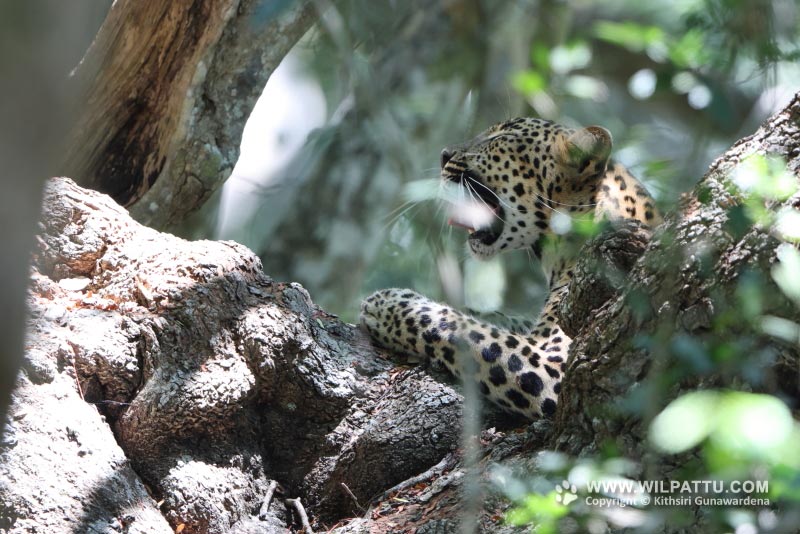
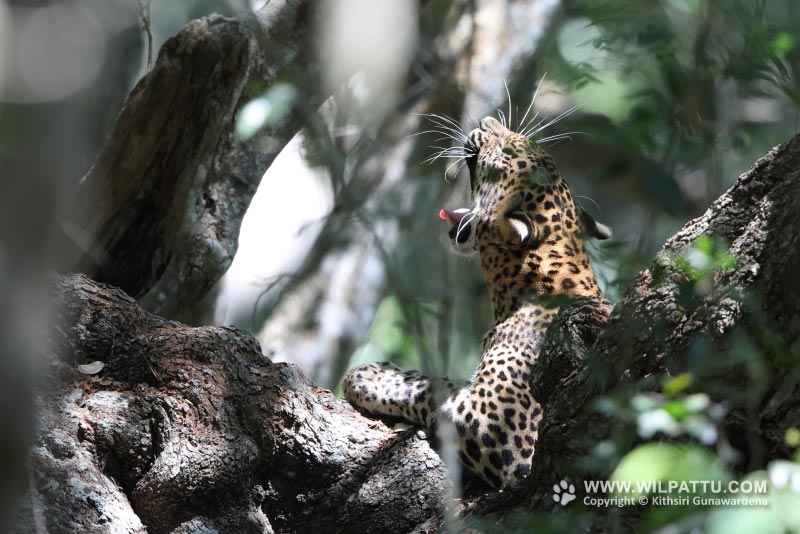
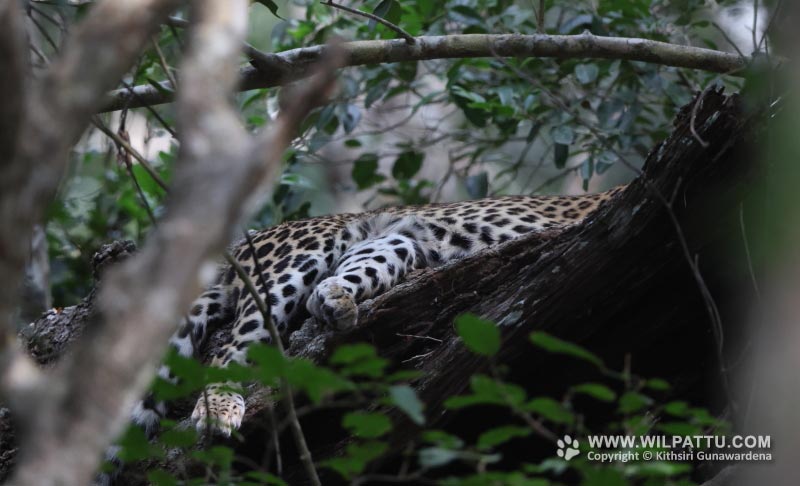
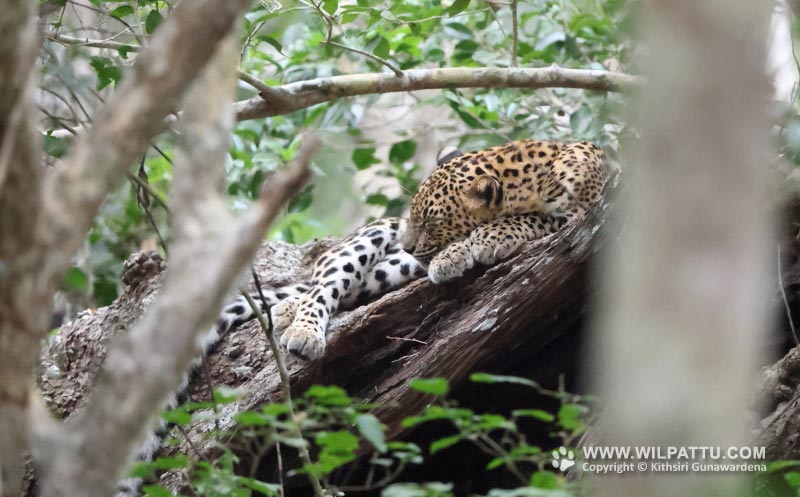
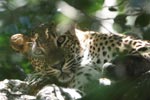
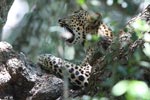
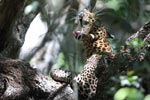
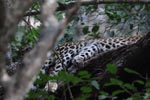
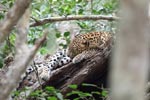
It was a young female cub of about 7 months of age. The leopard was lying down on a bent “Palu” tree about 100 meters from the road at Maha Wewa. The feline was only visible through the foliage from one narrow opening, and the vehicles had to queue up and take turns to get a view. She was sleeping with her head down and out of sight. After a few rounds of spending about five minutes and returning to the end of the queue I was fortunate to have my turn when she raised her head. I managed to take a few images of her looking in my direction and the two sides of her face during another turn, enabling me to identify the leopard. Around 1.45pm she climbed down and disappeared into the forest. I had received images of this cub and her male sibling from Pathum Neeliya on the 9th of January 2026 and listed her in “Leopards of Wilpattu – Guest” section as Maha Wewa leopard 7. Since this is my first sighting I named her as Maha Wewa Female 2 with the code MHWFC 2.
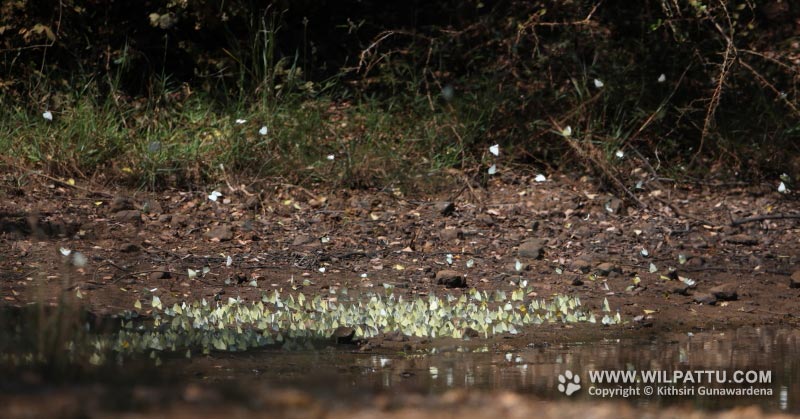
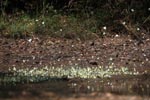
2.39am the butterfly season had begun in Wilpattu with many of these endemic Sri Lankan Lesser Albatross butterflies flying along the roads. They gather in large numbers in damp locations “mud sipping” where they feed on minerals from the ground. I photographed such a large gathering at Ibba Wala.
3.20pm I arrived at Nelum Wila and was informed by a safari jeep driver that a Leopard had moved into a small patch of forest around 10.30am and they had waited until now and left since the cat did not move out.
3.40pm I arrived at the spot and managed to spot the leopard with the help of my binoculars sleeping less than 20 feet from the road but well concealed by foliage. N 08.40732, E 079.98463
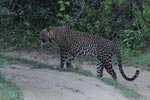
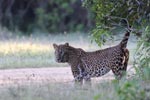
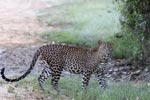
5.05pm the Leopard moved on to the road and walked towards the road to Panikkar Villu. The young male “marked” the bushes along the road.
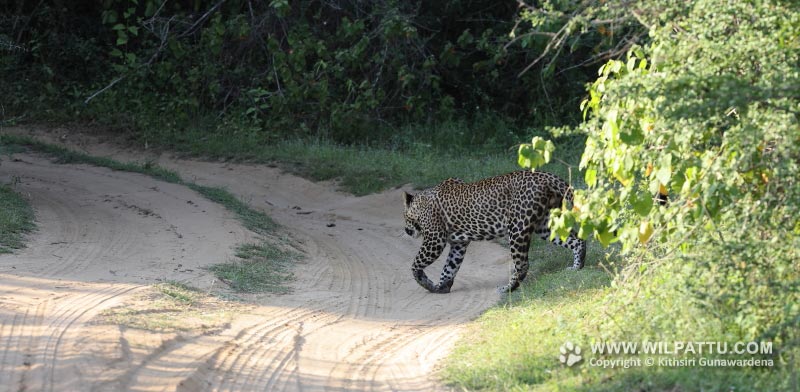
I followed the leopard and managed to get a few images as he looked in my direction before disappearing into the forest. Later upon examining its spot pattern I was pleased to note that this is the male cub of the second litter of the famed Manikrala Uraniya Female 1 that I had named as Kuruttupandi Male 1 (KRPMC 1). This young male is 2 years and two months of age now.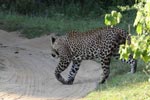
6.00pm left the park.
6.30pm 87 Spotted deer and two bull elephants at Hunuwilagama tak.
2nd April 2026
7.10am entered the park.
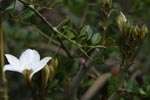
10.22am The wild orchid Vanilla walkeraewas in bloom at Thimbiri Wila.
This species is found in South India as well. It is a leafless epiphytic orchid that produces beautiful large white flowers in April, May and June. The body of the plant is a thick greenish climber that attaches itself to its host tree or bush with tiny roots.
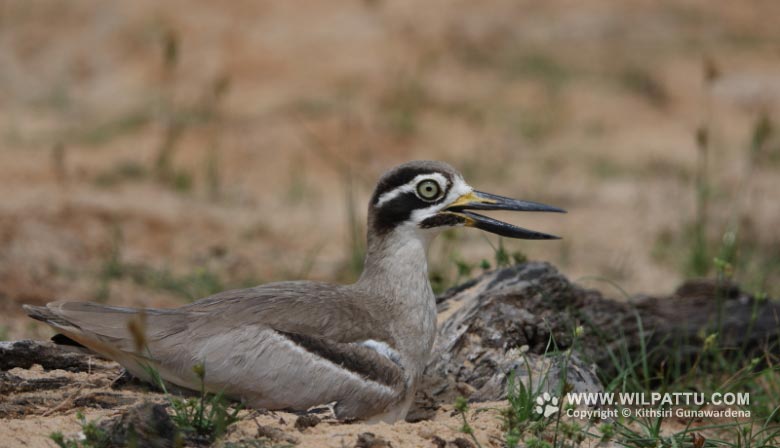
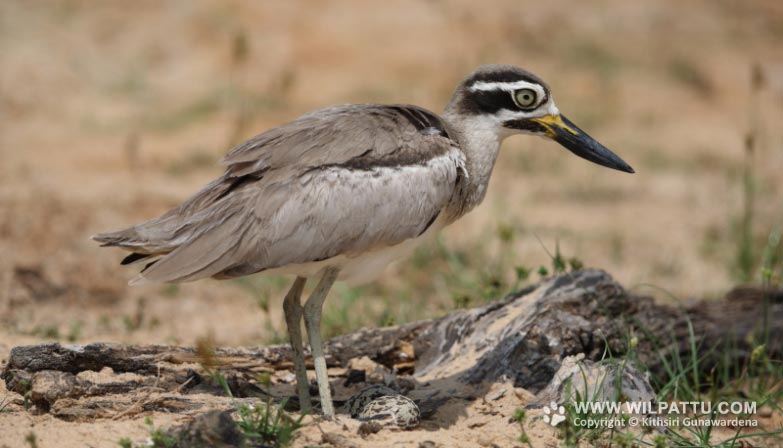
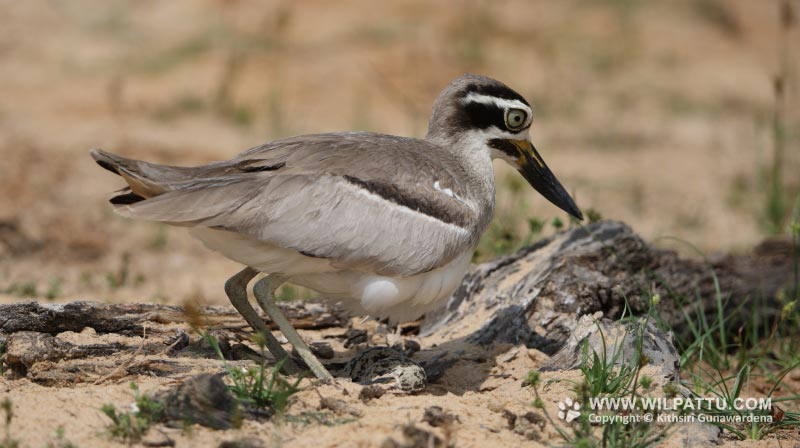
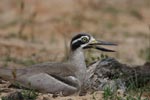
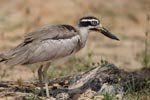
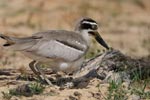
10.27am A Great Stone Plover was incubating two eggs she had laid on the sandy area bordering the road at Thimbiri Wila.
The bird moved away upon the approach of my vehicle, but I noticed that she returned to the same spot within a few minutes. Upon examining the area with my binoculers, I was able to detect the two well camouflaged eggs on the ground. I parked at a distance to observe the bird while causing minimum disturbance. Within a few minutes she walked up to the eggs and settled on the same.
2.43pm one Leopard at Maha Wewa. N 08.37494, E 080.12744
It was Maha Wewa Female 2, the same leopard that was found at this location yesterday. She was sleeping on the same tree with only half of her body visible. Around 4 pm as I pulled up to take my turn, she moved her position allowing me to get a few good images. I hurriedly clicked a few and left permitting others behind me to take their turn.
4.45pm left the park.
6.15pm a herd of 15 elephants arrived at the Hunuwilagama tank.